
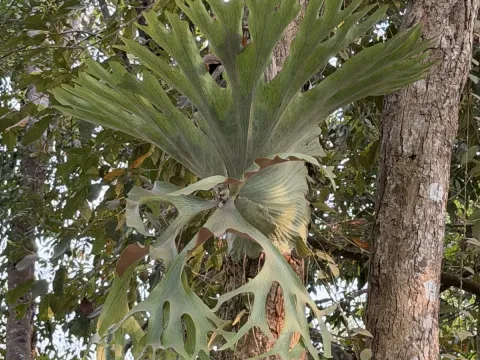
Staghorn fern
Platycerium Desv.
The Staghorn fern (Platycerium Desv.) belongs to the Polypodiaceae family and is a specialized genus of epiphytic ferns. Native to tropical regions of Africa, Southeast Asia, and Australia, these plants are uniquely adapted to grow on trees rather than in soil.
What the section contains


Staghorn fern
Morphologically, Platycerium is characterized by two distinct types of fronds: broad, shield-like sterile fronds that protect the root system and branched, antler-like fertile fronds. They thrive in temperatures between 20°C and 25°C, requiring a stable climate to prevent dormancy.
Cultivation requires bright, indirect sunlight, mimicking the filtered light conditions of the tropical canopy. High atmospheric humidity, ideally above 70%, is essential for the healthy development of both frond types and the overall structural integrity of the plant.
The potting medium must be highly porous and breathable. A mix consisting of orchid bark, charcoal, and sphagnum moss is considered the industry standard to prevent root asphyxiation and allow for efficient water retention without stagnant conditions.
Watering techniques are crucial; immersion is the preferred method for potted or mounted plants. The water should be of good quality and at room temperature, while avoiding direct soaking of the plant's crown to prevent secondary bacterial infections.
Scale insects and mealybugs are the primary threats to the health of Platycerium. These pests often hide beneath the overlapping sterile fronds, making manual inspections a critical component of regular plant maintenance and pest control protocols.
Root rot is the most common physiological disorder caused by overwatering or using a medium with poor drainage. Once the roots are compromised, the entire plant structure typically declines rapidly due to the inability to manage moisture levels.
Poor ventilation contributes to fungal outbreaks, including various leaf spot pathogens that disfigure the foliage. Improving air circulation around the plants is an effective preventive measure for greenhouse and indoor cultivation environments.
Chemical sensitivity is a notable trait of this genus; strong pesticides or oils can cause localized tissue damage. It is recommended to test any chemical application on a small, inconspicuous part of the frond before applying it to the entire plant.
Consistent monitoring and the implementation of clean horticultural practices significantly reduce the likelihood of pest outbreaks and disease, ensuring optimal decorative quality for the crops.