
Navarretia minima
Navarretia minima
Description
Growing requirements
Navarretia minima is an annual herbaceous plant belonging to the Polemoniaceae family. It is a diminutive species native to the western regions of North America, typically found in specialized ecological niches that experience fluctuating water levels.
The plant thrives in open, sunny locations such as vernal pools, dried-up lake beds, and seasonally moist meadows. These environments are characterized by heavy clay soils that retain significant moisture during the spring thaw but undergo rapid desiccation as summer temperatures rise.
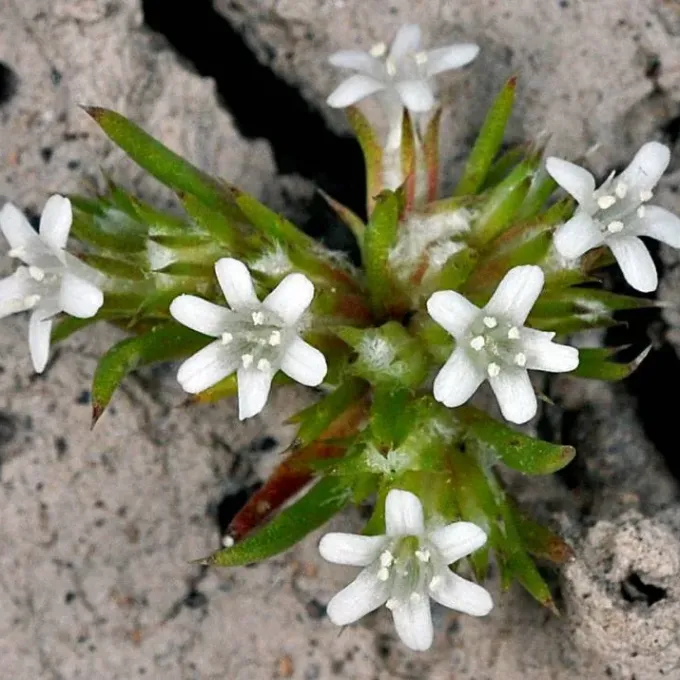
Morphologically, Navarretia minima is distinguished by its small stature, usually reaching only 10 to 15 centimeters in height. Its leaves are narrowly divided and often possess spine-tipped lobes, a defensive and water-saving adaptation typical of many species within the Navarretia genus.
The flowering process is tightly synchronized with soil moisture availability. The plant produces small, head-like inflorescences enclosed in prickly bracts, with flowers displaying colors ranging from white to light lavender or blue, serving as a pollen source for local pollinators.
Adaptability is the cornerstone of its biological success. The species has evolved to complete its life cycle rapidly, ensuring seed production before the onset of the extreme summer drought that characterizes its natural range.
Main diseases and pests
The primary threats to Navarretia minima populations include habitat destruction due to land conversion for agriculture, road construction, and the modification of natural drainage patterns in vernal pool ecosystems.
Invasive species represent a significant threat to its survival. Because of its low competitive ability, Navarretia minima is easily outcompeted by robust, non-native grasses that grow taller and shade the ground, denying the light necessary for its development.
Disease pressure in native populations is relatively low, but in experimental cultivation settings, the plant is susceptible to root-related pathogens. Excessive standing water combined with high temperatures can lead to the development of pathogenic fungi.
Insect pests include various species of herbivorous beetles and lepidopteran larvae that target the flowering parts of the plant. However, due to the bristly nature of the bracts, severe infestations are rare in healthy, undisturbed environments.
Conservation of the species relies on identifying and protecting remaining vernal pool clusters. Maintaining the natural integrity of soil crusts and the indigenous vegetation structure is essential to preventing the further decline of this unique botanical resource.