
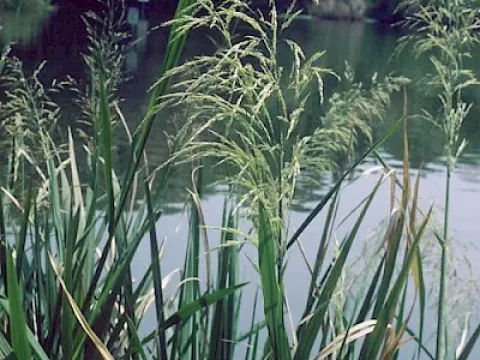
Zizaniopsis
Zizaniopsis
Zizaniopsis is a genus of perennial grasses within the Poaceae family, naturally thriving in wetland environments and water-logged soils.
What the section contains


Zizaniopsis
In agricultural settings, propagation is predominantly carried out via rhizome division, which ensures rapid establishment and clonal uniformity of the crop.
Planting should be executed in early spring, allowing the root system to adapt to the saturated substrate before the onset of the hottest summer temperatures.
When using seeds, they must be sown on the surface of damp, fertile soil where they can receive sufficient light to trigger the germination process.
Strategic placement in the water-holding zones of a farm is essential to facilitate the growth of these robust, semi-aquatic grasses.
The primary growth requirement for Zizaniopsis is a consistently high moisture level, as the plant acts as a hydrophyte, drawing nutrients directly from aquatic environments.
The plant thrives in nutrient-rich silty or clayey soils, which are capable of retaining moisture and providing a firm anchorage for the sprawling rhizomes.
Full sun exposure is a mandatory condition, as the plant does not tolerate shading and requires intense light to maximize its photosynthetic capacity and biomass yield.
Zizaniopsis is well-adapted to moderate climates, though it requires protection from severe, sustained freezing temperatures that could damage its perennating structures.
The water quality should be monitored to ensure it contains necessary dissolved minerals, which significantly boost the vegetative growth of the crop.
Zizaniopsis is highly regarded for its potential to produce substantial biomass, making it a candidate for various agricultural and industrial applications.
Yields are heavily dependent on soil fertility and the availability of nitrogen, which supports the rapid development of stems and lush, elongated leaves.
The crop demonstrates excellent resilience, allowing for multiple harvests per growing season provided that the management of the hydration levels is consistent.
Biomass production reaches its peak during the active growing phase, right before the plant shifts its metabolic energy toward flowering and seed maturation.
Optimizing the planting density and ensuring proper field management can lead to significant annual harvests, maximizing the agricultural utility of wetland areas.
Like many wetland species, Zizaniopsis is susceptible to fungal infections if stagnant water conditions coincide with poor airflow and high humidity levels.
Pests such as stem borers or aphids can target the crop, potentially reducing the quality of the harvest and overall plant vitality if not properly managed.
Competition from more aggressive aquatic weeds can stifle the crop during the early establishment phase, necessitating active site maintenance.
Environmental pollutants in the water supply can compromise the plant's health, leading to physiological stress and reduced growth performance.
Integrated pest management strategies are recommended, focusing on maintaining optimal plant spacing to prevent the rapid spread of infections among the crop.
Harvesting Zizaniopsis is typically conducted during the mid-vegetative stage, before the plant enters the reproductive phase, to ensure high nutrient concentration.
Mechanized harvesting tools designed for aquatic areas are employed to streamline the process, ensuring the mass is gathered efficiently without damaging the ecosystem.
Once harvested, the plant material must be processed or dried promptly; the high internal moisture content makes it prone to rapid decay if stored incorrectly.
Preservation methods, such as ensiling, are often used to maintain the quality of the biomass for animal feed or other agricultural uses over longer periods.
Careful attention must be paid to leave a portion of the rhizomes intact, ensuring the crop can successfully regenerate in the subsequent agricultural cycle.