
Southern wildrice
Zizaniopsis miliacea
Description
Growing requirements
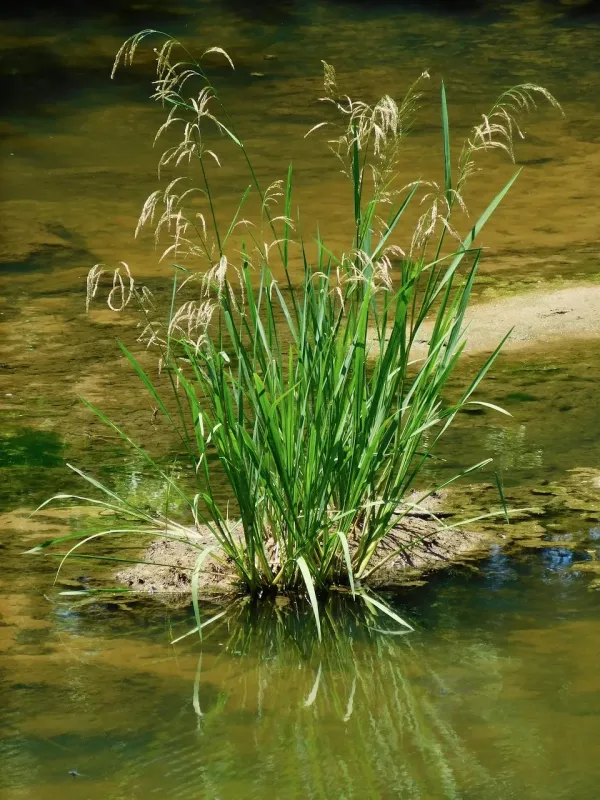
Southern wildrice (Zizaniopsis miliacea) is a robust perennial grass species belonging to the Poaceae family. It is a true hydrophyte, naturally occurring in dense colonies within marshes, wetlands, and along river margins across North and South America.
The plant is biologically adapted to semi-aquatic environments, capable of thriving in deep water or waterlogged soils. Its extensive root system provides stability in moving water, making it a critical species for soil erosion control in riparian zones.
Botanically, it features tall, erect culms that can reach heights of 3 meters. The leaf blades are long, flat, and often characterized by sharp, serrated edges. The inflorescence is a large, spreading panicle that produces small, grain-like fruits.
Growth requirements are primarily focused on constant moisture availability and nutrient-rich soil substrates. It thrives in full sunlight, which is necessary for the plant to achieve its high biomass production rates during the peak growing season.
Agricultural and industrial interest in Zizaniopsis miliacea is centered on its potential for phytoremediation, waste water treatment, and the production of cellulosic biofuels. Its rapid growth and ability to assimilate nutrients make it a valuable asset for sustainable wetland management.
Main diseases and pests
Pathogenic fungi, particularly those causing leaf rust and blight, are the primary threats when the plant is grown in overcrowded conditions with poor air circulation. Proper management of canopy density is essential to mitigate these biological risks.
Insect pests, including several species of grass-feeding caterpillars and stalk borers, can occasionally cause damage. However, the plant's aggressive growth habit typically allows it to outpace and recover from minor to moderate herbivory without significant yield loss.
The species can exhibit invasive behavior outside of its native range, as it spreads efficiently through both seed dispersal and rhizomatous expansion. Land managers must implement strict containment strategies to prevent unwanted colonization of natural waterways.
Environmental stress, such as extreme winter frost or prolonged drought outside of aquatic settings, can lead to dormancy or mortality. The plant is best suited for stable aquatic habitats where temperature fluctuations are buffered by the water body.
Effective management includes integrated pest control strategies that prioritize environmental safety due to the plant's role in aquatic ecosystems. Scouting for early signs of disease and clearing debris helps maintain the health of Zizaniopsis stands.