
Trichopteryx dregeana
Trichopteryx dregeana
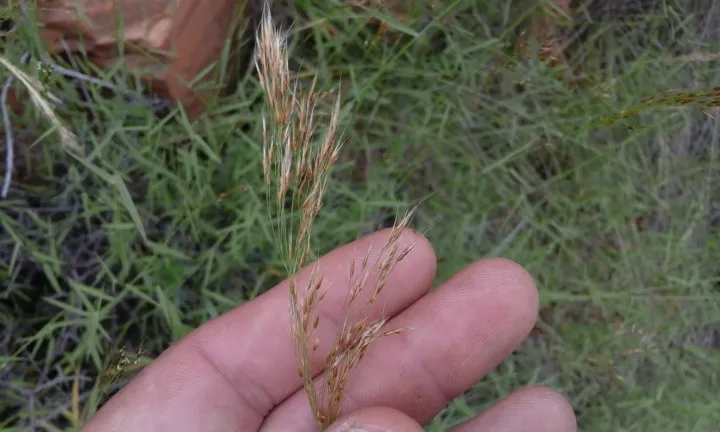
Description
Sowing dates
Trichopteryx dregeana is a perennial grass species that is primarily propagated through seeds. Successful cultivation begins with sowing at the start of the rainy season to ensure that young seedlings have sufficient moisture for deep root establishment and survival during their early growth stages.
Field preparation must be thorough, ensuring the removal of competing weeds, as this species shows slow initial growth rates that make it vulnerable to shading. Seeds should be sown at a shallow depth of 1–2 centimeters to allow for adequate oxygen contact while preventing premature desiccation.
In large-scale agricultural settings, using precision drills is highly recommended to maintain optimal plant density. Proper spacing is essential to reduce intraspecific competition for nutrients and water, which eventually leads to a more uniform crop canopy and better overall biomass production.
Before sowing, it is advisable to treat the seeds with growth stimulants or coating agents to enhance germination rates. Soil temperature is a critical factor; consistent warmth is required to break seed dormancy and encourage vigorous root development shortly after germination.
Once seedlings emerge, thinning should be performed if necessary to ensure that each plant has sufficient access to light and soil resources. Establishing a strong stand in the first year is the most important step for the long-term success of the field.
Growing requirements
This grass species requires significant exposure to sunlight to reach its full physiological potential, making it ideal for open, well-drained agricultural landscapes. While it exhibits some tolerance to varied soil types, it thrives best in deep, fertile loams with high aeration.
Trichopteryx dregeana is notably resilient to periods of mild moisture stress due to a robust root system capable of accessing deeper water reserves. However, supplemental irrigation during peak growth phases will significantly boost its vegetative productivity and nutritional quality.
Soil pH levels should be monitored, with neutral to slightly acidic conditions being the most suitable for nutrient uptake. Extremely saline or waterlogged environments are detrimental to the plant's health and should be avoided in selecting land for cultivation.
Balanced fertilization programs, focusing on phosphorus and potassium, are recommended to enhance structural integrity and plant health. Excessive nitrogen applications should be managed carefully to ensure the plant focuses on stable growth rather than purely succulent, weak vegetative tissue.
The climate must be free from severe frosts, as this species is sensitive to cold stress that can damage its meristematic tissues. Maintaining adequate airflow around the plant canopy is crucial to prevent the accumulation of humidity that favors disease development.
Yield
The yield of Trichopteryx dregeana is highly dependent on appropriate management, including the frequency and timing of harvests. With optimal care, the crop can provide multiple cuts per growing season, maintaining productivity for several years before needing renewal.
The dry matter of the plant contains a valuable profile of nutrients, making it a reliable choice for high-quality livestock feed. Productivity often peaks between the second and third years as the root system matures and the plant achieves full ground coverage.
For seed production, specific sections of the field must be excluded from harvesting. Allowing the plants to reach full biological maturity ensures that the seeds are fully developed and viable, which is essential for future planting cycles or market distribution.
Implementing modern agronomic monitoring systems allows farmers to determine the exact peak of nutrient concentration in the biomass. This precision ensures that the harvested material contains the highest possible nutritional density for animal consumption.
Regular maintenance of harvest equipment is vital to ensure clean cutting without damaging the crown of the plant. A clean cut facilitates faster regrowth, which is a key component in sustaining high annual yields throughout the life of the stand.
Main diseases and pests
The primary threats to Trichopteryx dregeana are fungal infections, particularly rust and leaf spots that thrive in humid or stagnant air. Disease management should emphasize preventative measures such as proper crop spacing and adequate field ventilation.
Pest management focuses on controlling leaf-eating insects that can rapidly reduce the photosynthetic capacity of the plant. Integrated pest management practices, including the use of biological controls, are preferred to maintain the long-term sustainability of the field.
Root rot is a significant risk in poorly drained soils, often exacerbated by over-irrigation. Ensuring a robust drainage system is the most effective way to prevent soil-borne pathogens from decimating the crop stands during periods of excessive rainfall.
Nematodes can affect the root systems, leading to reduced vigor and decreased yields over time. Crop rotation is an essential strategy to break the life cycle of soil-borne pests and maintain healthy soil biological conditions for the grass stand.
Weed control is critical during the initial stages of establishment, as aggressive weeds can quickly overpower young plants. Mechanical weeding and strategic mulching are effective tools for maintaining clean fields until the crop is established enough to shade out competing vegetation.