
Oxychloris scariosa
Oxychloris scariosa
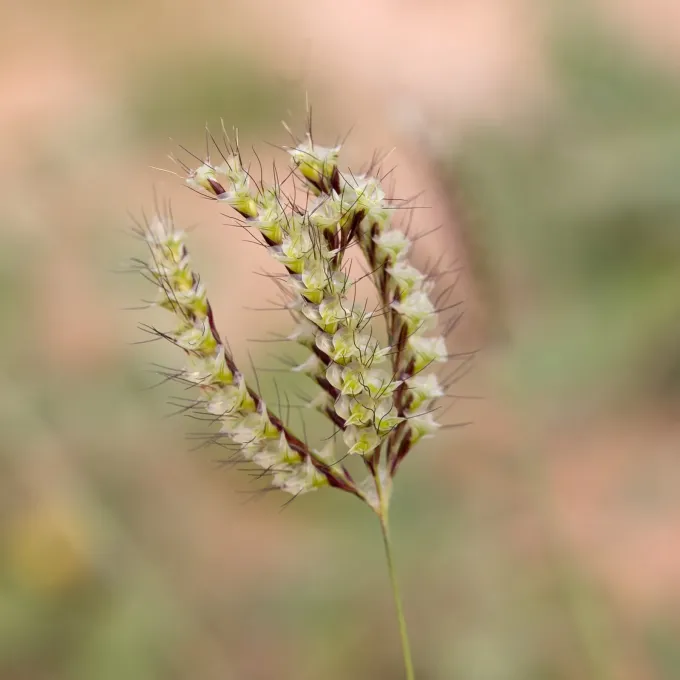
Description
Growing requirements
Oxychloris scariosa is a perennial grass belonging to the Poaceae family. It is native to the arid and semi-arid landscapes of Australia, where it has evolved to thrive under harsh environmental constraints.
The plant is highly regarded for its exceptional drought tolerance. It is capable of enduring prolonged periods of heat and limited moisture, maintaining its physiological functions when many other species fail.
Regarding soil requirements, the grass prefers well-drained substrates. It shows a notable tolerance to saline soil conditions, which makes it a valuable species for vegetation in reclaimed or marginal lands.
Botanically, it features a robust and deep-reaching root system. This structure is the key to its survival, as it maximizes water uptake during sparse rainfall events common in its natural habitat.
Minimal agronomic intervention is required for this species. It is well-suited for natural rangeland management where large-scale cultivation inputs are neither practical nor economically feasible.
Yield
The primary agricultural application of Oxychloris scariosa is as a forage crop for extensive livestock grazing systems in arid pastoral regions.
Livestock, including cattle and sheep, utilize the plant as a consistent source of fiber. It provides essential grazing cover in areas where more demanding commercial grasses cannot be established.
The resilience of the plant allows for quick recovery and regrowth following moderate grazing pressure, ensuring a continuous supply of fodder through the growing season.
In addition to its forage value, the plant serves as a vital component in soil conservation strategies, stabilizing topsoil against wind erosion in exposed open areas.
Farmers benefit from the long-term persistence of this grass, as it acts as a permanent ground cover that stabilizes the ecosystem and reduces the need for frequent re-seeding.