
Melocanna bambusoides
Melocanna bambusoides
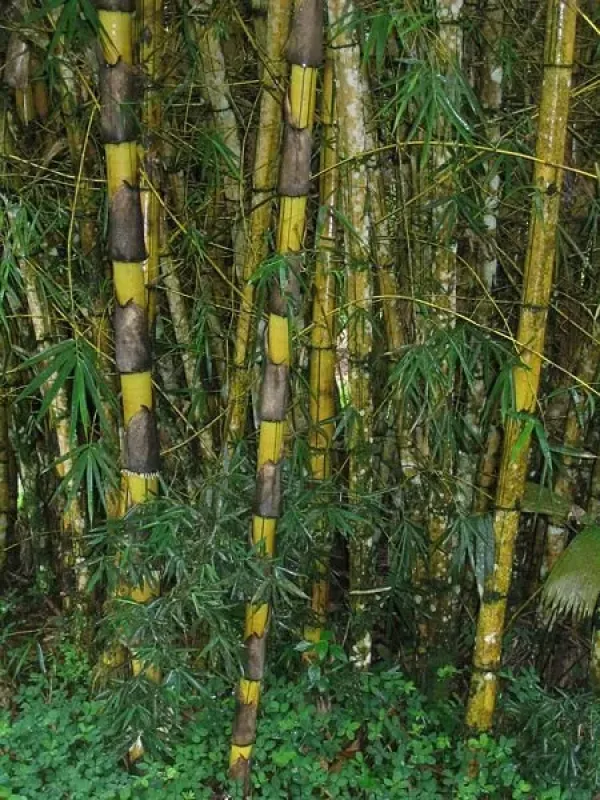
Description
Sowing dates
Melocanna bambusoides, a member of the Poaceae family, is distinct from other bamboo species due to its open, spreading growth habit rather than forming tight, dense clumps. It propagates primarily through long, vigorous rhizomes that allow the plant to colonize large areas efficiently.
Propagation can be achieved through seeds or rhizome division. In its natural tropical habitat, seeds germinate almost immediately upon hitting moist soil, meaning they must be planted fresh to maintain viability, as the embryos are highly sensitive to desiccation.
For industrial plantations, rhizome division is the preferred method of propagation. This technique ensures a higher survival rate and faster establishment of the bamboo stand compared to seed-based propagation, which is more vulnerable to environmental fluctuations during the early stages.
The optimal planting time is at the beginning of the monsoon season. Sufficient moisture during the initial growth phase is essential for the rhizomes to anchor themselves in the soil and support the rapid development of aerial culms in subsequent cycles.
Spacing during planting is critical and depends on the final use of the crop. For timber or fiber production, planting density should be carefully managed to allow for adequate airflow and sunlight penetration, preventing the competition that can weaken individual stems.
Growing requirements
This species is native to the tropical ecosystems of South and Southeast Asia, flourishing in regions where rainfall is abundant and temperatures remain consistently warm throughout the year. It lacks frost tolerance and is restricted to frost-free tropical and subtropical zones.
Soil requirements for Melocanna bambusoides include deep, well-draining, and fertile substrates, preferably with a slightly acidic to neutral pH. Although the plant enjoys high humidity, waterlogged soil can lead to root rot, necessitating proper land drainage before establishment.
The plant thrives in full sun but benefits from partial shade during its initial establishment phase. Consistent temperatures between 20°C and 35°C are ideal for triggering the characteristic rapid vegetative growth that makes this species commercially attractive.
Nitrogen-rich fertilizers are essential to maintain high biomass production, especially in plantation settings. Organic amendments like compost or mulch are highly recommended, as they improve soil structure and help retain moisture, which is vital for vigorous shoot development.
Maintenance of young plantations involves regular weeding, as competition from invasive grasses can suppress the development of young bamboo shoots. Once the canopy closes and the rhizome network matures, the bamboo naturally suppresses most weeds, reducing labor costs.
Yield
Melocanna bambusoides is highly valued in the pulp and paper industry due to its long fibers, which are ideal for high-quality paper production. Its rapid growth cycle allows for a sustainable yield once the plantation reaches maturity, typically within 5 to 7 years.
Beyond pulp production, the culms are extensively used in local construction and handicrafts. Its flexibility, combined with remarkable tensile strength, makes it an excellent material for structural components, flooring, furniture, and agricultural tools in tropical regions.
The yield of a plantation is measured by the number and quality of culms harvested annually. A sustainable management plan involves selective thinning, harvesting only the mature culms and leaving the younger ones to continue the development cycle of the plant stand.
The fruit of this bamboo is also edible and represents a valuable secondary resource in rural communities. Containing significant levels of starch, these fruits are gathered to supplement local diets, further enhancing the total economic return of the cultivation area.
Technological improvements in processing have increased the demand for this species, making it a viable crop for farmers. Its ability to regenerate from the same rhizome network after selective harvesting ensures long-term profitability without the need for constant replanting.
Main diseases and pests
Major pests affecting this bamboo include borers and weevils, which penetrate the hollow internodes of the culms. These infestations significantly degrade the quality of the wood and can lead to major economic losses if not managed through integrated pest control strategies.
Fungal diseases, such as leaf spot or root rot, are primarily caused by poor airflow and stagnant water conditions. Proper plantation management, including thinning and debris clearing, is the most effective way to prevent the spread of these pathogens.
Rodents pose a severe threat, particularly to seeds and young succulent shoots. Mass flowering events, which occur occasionally, often trigger population explosions of rodents, necessitating proactive trapping and monitoring to protect the young plantation units.
Over-reliance on chemical pesticides can disrupt the balance of beneficial predatory insects that naturally control pest populations. Farmers are increasingly adopting organic and biological control methods to maintain the ecological health of the plantation environment.
Fire risk is extremely high in bamboo forests due to the high density of dry biomass. Establishing firebreaks and removing old, dead culms are essential safety practices to prevent wildfire from wiping out large areas of the plantation during the dry season.
Harvesting
Harvesting is performed through selective manual cutting, which is the most sustainable way to manage the stand. By removing only fully mature culms, farmers preserve the integrity of the rhizome system and ensure that the plant continues to produce new shoots.
Culms should be cut as close to the ground as possible to avoid leaving stumps that might decay and become entry points for pests and fungi. This practice also prevents the hindrance of new shoot development in the upcoming growing season.
Post-harvest processing involves cleaning the culms of side branches and leaves. Once cleaned, the culms are sorted by diameter and length before being transported to processing facilities for pulp manufacture or construction product fabrication.
Storage requires a dry, well-ventilated area, preferably with the culms stacked on raised platforms to prevent ground moisture absorption. Keeping the material dry is critical to prevent mold and rot, which can destroy the technical properties of the bamboo wood.
Manual labor remains the standard for harvesting due to the complex, dense structure of the bamboo stand, which is difficult to navigate with heavy machinery. This allows for superior quality control, ensuring that only the best-suited material reaches the market.