
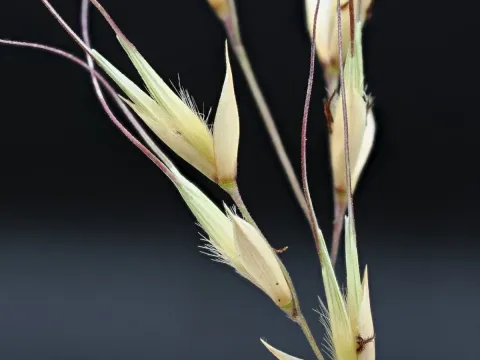
Eriachne
Eriachne
Eriachne is a genus of grasses belonging to the family Poaceae, encompassing over 40 species that are predominantly native to Australia. These grasses are recognized for their exceptional ability to colonize and thrive in arid and semi-arid environments where other vegetation often fails.
What the section contains


Eriachne
The botanical characteristics of this genus include a wide variation in habit, ranging from compact tufts to sprawling mats. Their leaves are typically narrow and sometimes involute, an adaptation that significantly reduces water loss through transpiration in harsh environments.
Environmental requirements for Eriachne are characterized by a high tolerance for poor, nutrient-deficient soils, including sands and stony substrates. They are well-adapted to high-temperature regimes and are capable of sustaining growth during significant seasonal droughts.
Agronomic management of Eriachne is limited, as it is primarily a wild-growing forage source. However, its resilience suggests that it could play a vital role in restoration projects aimed at rehabilitating degraded land in tropical and subtropical climatic zones.
In terms of agricultural utility, Eriachne serves as a critical forage resource for both wild herbivores and livestock. Its nutritional value is generally considered moderate, providing essential sustenance when more palatable pasture species are unavailable.
Primary threats to Eriachne populations include overgrazing, which prevents the plants from reaching maturity and effectively setting seed, leading to a gradual decline in stand density over several growing seasons.
While the genus is generally hardy, it can be susceptible to various fungal pathogens, such as rusts and smuts, especially when localized environmental humidity levels spike during unusual weather patterns.
Insect pests, particularly grasshoppers and various species of weevils, can cause significant damage to the photosynthetic tissue, reducing the plant's overall energy reserves and vigor.
Competition from invasive plant species poses a constant threat, as these invaders often outcompete native Eriachne species for space and limited soil moisture in disturbed habitats.
Environmental degradation, including excessive soil compaction from grazing animals and the disruption of natural fire regimes, continues to be a major concern for the long-term sustainability of native Eriachne stands.