
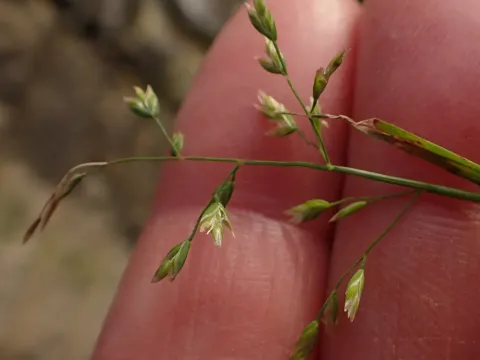
Eremopoa
Eremopoa
Eremopoa is a genus of annual grasses belonging to the Poaceae family. These plants are uniquely adapted to thrive in arid and semi-arid environments where other grass species struggle to survive.
What the section contains


Eremopoa
The natural habitat of Eremopoa spans the regions of Western and Central Asia. They are typically found in rocky slopes, sandy plains, and desert-like landscapes, exhibiting remarkable resilience to extreme solar radiation.
Botanically, Eremopoa is characterized by its ephemeral life cycle. The plant germinates, grows, and produces seeds during the short rainy season, typically in early spring, before entering a state of senescence during the hot summer.
The soil requirements for this culture focus on excellent drainage and the ability to tolerate saline or alkaline conditions. They perform best in soils with low organic matter where they do not have to compete with dense vegetation.
Climate adaptation is the strongest trait of Eremopoa. The plant requires cool to mild temperatures during its initial growth phase and can withstand significant heat stress once the reproductive cycle is initiated.
Diseases such as fungal leaf spots can appear if spring rainfall is higher than average. These pathogens often thrive when there is poor ventilation between individual plants in the field.
Pests including aphids and certain species of grasshoppers present the primary biotic threat. They tend to feed on the tender, succulent leaves of the plant during the peak of its vegetative growth.
Root system damage from soil-borne larvae can weaken the plants significantly. Proper soil management and avoiding monocultural practices help to minimize these issues in agricultural settings.
Rust fungi are potential threats in regions with high humidity. Selecting resistant landraces or localized seed varieties is a recommended strategy for long-term cultivation success.
Environmental threats, such as erratic rainfall patterns, can disrupt the plant's natural phenological development. Consistent monitoring is necessary to ensure optimal timing for forage harvest or seed collection.