
Eremopoa altaica
Eremopoa altaica
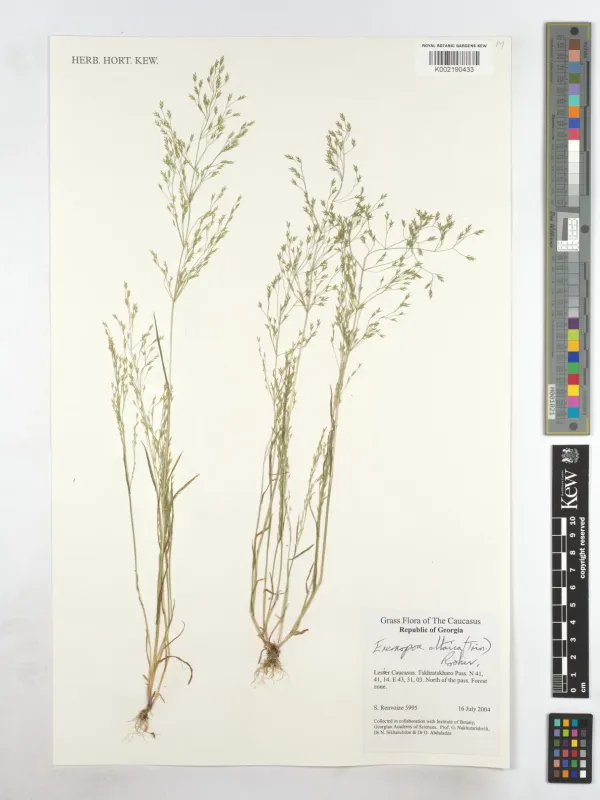
Description
Sowing dates
Eremopoa altaica is classified as an ephemeral grass, which strictly defines its life cycle and sowing requirements. In its natural habitat, seeds germinate during late winter or early spring when temperatures allow, utilizing the seasonal moisture.
When cultivating for pasture improvement, sowing should be done in late autumn or immediately after snowmelt. This timing is critical to ensure the plants establish before the onset of the intense summer drought.
Seeds are small and contain limited energy reserves, so they must be sown at a shallow depth of 0.5 to 1.0 centimeters. Deeper planting often leads to failure, as the seedlings cannot reach the surface.
Broadcast seeding or shallow mechanical drilling followed by soil compaction is the standard method for rangeland establishment. Ensuring good seed-to-soil contact is the most important factor for success.
Because the growing season of this species is very short, any delay in planting leads to reduced biomass and poor survival rates, as the plants may not complete their life cycle before the dry season.
Growing requirements
This species belongs to the Poaceae family and is highly adapted to arid and semi-arid zones. It thrives in regions characterized by severe continental climates with harsh, dry summers.
Eremopoa altaica requires open, sunny environments. It is not shade-tolerant and struggles to compete against larger, taller perennial species, which is why it often dominates sparse vegetation communities.
It is relatively undemanding regarding soil fertility, successfully growing on rocky, stony, and sandy substrates. It shows high tolerance to soil salinity, allowing it to colonize challenging desert soils.
Moisture availability at the beginning of the growth phase is the primary limiting factor. While the plant is drought-resistant, it needs adequate water during its early vegetative stages to produce foliage before the onset of heat.
The plant demonstrates excellent resilience to temperature fluctuations. It is adapted to cold early-spring conditions, allowing it to initiate metabolic activity while the soil is still cool.
Yield
The agricultural value of Eremopoa altaica is primarily found in livestock grazing. It serves as a vital source of early-spring forage, providing essential nutrients when other grasses are still dormant.
Biomass production is directly correlated with spring rainfall levels. In favorable years, the plant can form a dense enough stand to support efficient grazing for sheep and goats.
While total biomass is lower compared to standard fodder crops, its high nutritional density in the young stage makes it an excellent supplement in desert pasture systems.
Once the seeds mature, the foliage rapidly dries out and becomes stemmy, significantly reducing its palatability and nutritional value. Consequently, it is best utilized through intensive early-season grazing.
On natural rangelands, this grass plays a crucial ecological role in maintaining ground cover and preventing soil degradation during the most arid months of the year.
Main diseases and pests
Typical pests include various insects that feed on grasses, such as cereal aphids and flies. However, due to the species' rapid life cycle, pest outbreaks rarely cause significant economic damage.
Fungal diseases like rust or powdery mildew are infrequent, as the arid environment in which it grows is naturally hostile to most common cereal pathogens.
In natural conditions, rodents often pose a threat to populations by consuming large quantities of seeds and young sprouts, which can cause significant fluctuations in annual density.
Competition from invasive weeds is the main threat in managed areas. Without appropriate pasture management, more aggressive plants can easily displace this low-growing grass.
Overgrazing, particularly when it prevents the plants from reaching the seeding stage, is the primary human-driven factor that leads to the decline of Eremopoa altaica in natural grasslands.
Harvesting
Harvesting for hay is rarely practiced due to the plant's short stature and quick desiccation. Grazing remains the most sustainable and efficient method of utilization for this crop.
When seed collection is intended, it must be performed at the wax-ripeness stage. Delaying the harvest leads to high shattering losses, as the seeds disperse rapidly upon reaching maturity.
Seeds require gentle handling during cleaning and drying to maintain high germination energy. Storage should be in cool, dry conditions to prevent spoilage and metabolic decay.
Mechanized harvest is possible only in specialized seed production fields using low-profile mowing equipment. Standard agricultural machinery is generally unsuitable for such low-biomass targets.
To ensure long-term productivity, rotational grazing or periods of rest are required, allowing the population to produce enough seeds for natural recruitment and soil seed-bank replenishment.