
Desmostachya bipinnata
Desmostachya bipinnata (L.) Stapf
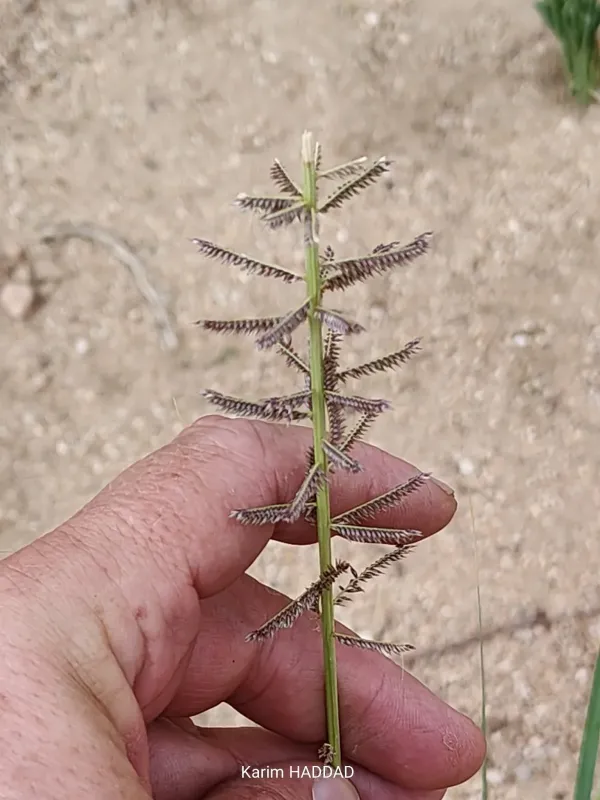
Description
Growing requirements
Desmostachya bipinnata, commonly known as Halfa grass, is a perennial rhizomatous grass belonging to the Poaceae family. It is native to arid and semi-arid regions spanning from Northern Africa through the Middle East to India.
This species is highly valued for its exceptional physiological resilience. It thrives in harsh environments, characterized by high temperatures and poor soil fertility, often serving as a pioneer species in desert reclamation.
The plant has a deep-reaching, tough root system that anchors it firmly in sandy soils, making it an excellent candidate for sand dune stabilization and the prevention of wind-induced soil erosion.
It prefers sunny, open environments and exhibits significant tolerance for high salinity and alkaline soil conditions, where it often outcompetes less hardy vegetation.
Agricultural propagation is typically achieved through vegetative division of the rhizomes. Once established, the plant requires minimal maintenance, as it is perfectly adapted to the natural moisture cycles of its native range.
Yield
The agricultural utility of Desmostachya bipinnata is primarily centered on forage for livestock, specifically in areas where high-yielding grasses cannot be cultivated due to water scarcity.
In addition to its role as pasture, the dried stems are widely utilized for making traditional mats, ropes, and thatch for roofing, reflecting its importance in local rural economies.
While biomass yield is moderate, the plant provides a consistent supply of roughage throughout the dry season when other fodder sources become scarce.
Research into the plant's phytochemical properties suggests it may also have applications in phytoremediation, specifically for cleaning soil contaminated with heavy metals.
The stems are also studied as a potential source for pulp and paper production, adding value to its ecological role in land rehabilitation projects.
Main diseases and pests
Desmostachya bipinnata is remarkably resistant to most common grass pathogens, likely due to its evolution in extremely dry climates that limit fungal growth.
Insect pests are generally deterred by the plant's tough, silicified leaves, which provide a physical barrier against herbivory and infestation.
The primary threat to the longevity of the grass stands is uncontrolled and over-intensive grazing, which can deplete root carbohydrate reserves and lead to site exhaustion.
The plant does not typically suffer from major viral or bacterial outbreaks, making it a low-input crop suitable for sustainable land management.
Proper management involves rotational grazing or controlled harvesting cycles to ensure the plant remains vigorous and continues to provide ecosystem services.