
Coastal saltgrass
Distichlis littoralis
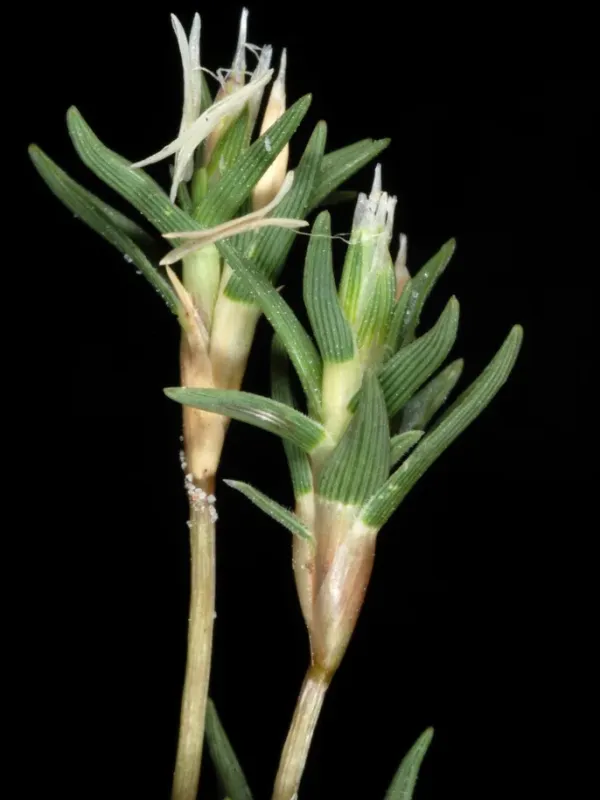
Description
Growing requirements
Coastal saltgrass (Distichlis littoralis) is a perennial grass species belonging to the Poaceae family, widely recognized for its exceptional resilience to salinity and harsh environmental conditions.
The plant originates from the coastal regions of the Americas, where it has evolved as a pioneer species in salt marshes, dunes, and tidal zones, playing a crucial role in stabilizing sandy shorelines.
It requires full sun exposure for optimal growth and proliferation. Shade significantly inhibits its development, making it unsuitable for areas with high tree canopy density or permanent shade.
The crop thrives in various soil types, ranging from sandy to clay-heavy, provided that the drainage is adequate to prevent long-term waterlogging around the root zone, despite its tolerance to periodic flooding.
It is an essential plant for managing marginal lands that are unsuitable for traditional agriculture. Its robust rhizomatous root system makes it an excellent choice for erosion control and environmental restoration projects.
Main diseases and pests
While extremely hardy, Coastal saltgrass is susceptible to soil-borne pathogens if the planting site lacks proper water management, which can lead to root system decay in stagnant conditions.
Insect pests such as grass aphids and certain types of stem-boring insects may occasionally affect growth rates, especially during prolonged heat waves when the plant's metabolic pace slows down.
Fungal issues, particularly in high-humidity climates, are often a result of excessive biomass accumulation, which traps moisture and creates a breeding ground for pathogens.
Effective management includes timely mowing and residue removal to maintain airflow within the canopy, which effectively reduces the incidence of fungal outbreaks in the grass stand.
Chemical control should be applied with caution; given the species' role in environmental rehabilitation, integrated pest management (IPM) practices are preferred over intensive pesticide use.