
Dasyanthum wheatgrass
Agropyron dasyanthum
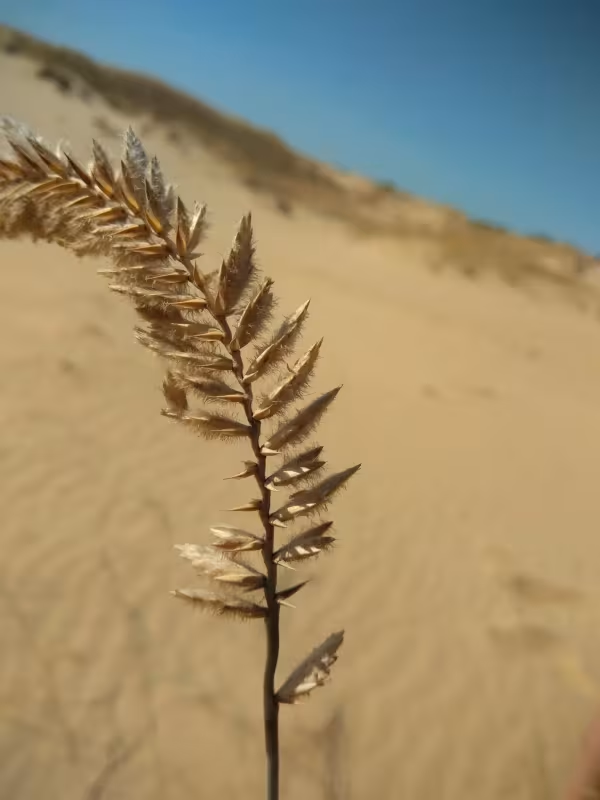
Description
Sowing dates
Sowing Dasyanthum wheatgrass is best accomplished during early spring, allowing the seeds to utilize the residual soil moisture from winter. Early establishment is crucial for the seedlings to develop a strong root system before the onset of summer drought.
The optimal seeding depth is between 2 and 4 cm. On lighter, sandy soils, deeper placement helps ensure that the seeds have access to consistent moisture, whereas shallower sowing is preferred in heavier loam textures.
The seeding rate generally ranges from 8 to 12 kg per hectare. Uniform distribution across the field is essential to ensure a dense stand, which helps in outcompeting weeds during the initial establishment period.
Post-sowing rolling is a standard agricultural practice that improves seed-to-soil contact. This step is particularly vital in arid conditions to facilitate capillary water movement to the seeds for uniform germination.
As the plant has a slow initial growth rate, controlling weeds during the first year is critical. Cultivation or the use of selective herbicides may be necessary to ensure the stand successfully establishes without excessive competition.
Growing requirements
Dasyanthum wheatgrass belongs to the Poaceae family and is recognized as a hardy, drought-tolerant species. It is natively adapted to steppe and semi-arid environments where water availability is a limiting factor.
The plant performs exceptionally well on a variety of soil types, including chernozem, chestnut, and sandy soils. It is particularly valued for its ability to thrive in soils that are low in nutrients or slightly saline.
One of the most notable features of this species is its high tolerance for salinity. It is widely used in land reclamation projects to restore degraded areas and stabilize loose, sandy soils to prevent erosion.
The plant exhibits excellent cold hardiness and is capable of surviving extreme winter temperatures with little snow cover. This makes it a reliable perennial option for forage systems in regions with continental climates.
Adequate sunlight is essential for the healthy development of this grass. While it is tolerant of harsh environmental factors, it does not perform well under dense shade, which can inhibit tillering and biomass production.
Yield
Yields of green biomass typically range from 15 to 25 metric centners of hay per hectare under favorable conditions. Its high nutritional profile, rich in proteins and carbohydrates, makes it an excellent forage source.
The stand reaches peak productivity by the second or third year after establishment. With proper management, including rotational grazing and occasional fertilization, the stand can remain productive for many years.
Nitrogen fertilization in early spring is highly effective at boosting biomass yields. However, application rates should be carefully managed based on soil test results to prevent excessive vegetative growth that may decrease palatability.
Seed production is consistent, typically yielding between 3 and 5 metric centners per hectare. Farmers should monitor the field closely to harvest the seeds at the right maturity stage to maximize yield.
The grass is known for its good regrowth potential after grazing, making it highly suitable for pasture-based livestock systems. It is resistant to moderate trampling, which helps maintain the structural integrity of the pasture.
Main diseases and pests
Rust fungi are the most common pathogens affecting this species, particularly in regions with high humidity. Severe rust outbreaks can reduce the overall quality and digestibility of the forage.
Ergot and loose smut can occur, impacting both biomass quality and seed viability. Implementing crop rotation and utilizing certified, disease-free seed are essential prevention strategies.
Pests such as wheat flies and various grass-feeding beetles can damage young seedlings. Vigilant scouting during the early growth stages is necessary to determine if chemical control is required.
Root rot diseases may develop if the soil remains waterlogged for extended periods. Ensuring good field drainage is the most effective preventative measure against these soil-borne pathogens.
Small rodents can pose a threat to the crop during the dormant season, often feeding on the crown of the plants. Managing surrounding habitats helps reduce the risk of localized damage.
Harvesting
Harvesting for hay should be performed at the early heading stage. This timing ensures the best balance between total yield and the nutritional quality, before the stems become too fibrous and lignified.
The cutting height should be maintained at a minimum of 6 cm. Proper stubble height is essential for protecting the plant's growing points and encouraging rapid regrowth after harvest.
For seed harvesting, direct combining is the preferred method once the seeds reach physiological maturity. Because the seeds are prone to shattering, timely harvest is necessary to minimize field losses.
After harvest, the seeds should be dried to a moisture content of 12–14% to ensure long-term stability during storage. Proper aeration is necessary to prevent spoilage in storage containers.
Hay should be baled or stacked in well-ventilated areas protected from moisture. Proper storage preserves the nutrient content and ensures the availability of high-quality feed throughout the winter months.