
Velvety wheatgrass
Agropyron velutinum
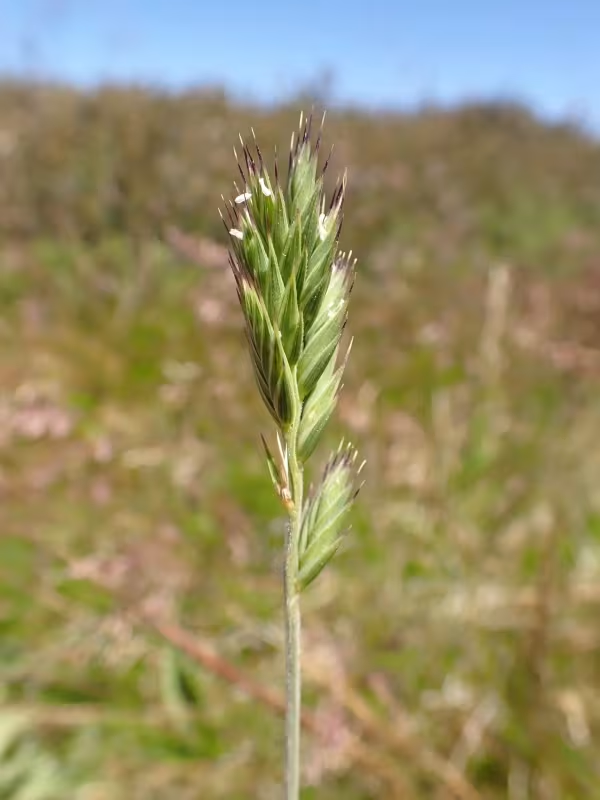
Description
Growing requirements
Velvety wheatgrass (Agropyron velutinum) belongs to the Poaceae family. It is a hardy perennial grass known for its distinctive velvety leaf texture, which distinguishes it from other wheatgrass species.
The plant is native to regions with varied topography, showing a high level of adaptation to dry, rocky, and low-nutrient soil environments. It is recognized for its extensive and robust root system.
Climate requirements include moderate moisture and significant solar exposure. The species is highly drought-tolerant, maintaining growth during periods of limited precipitation better than many common cultivars.
Regarding soil, it thrives in well-drained substrates. While it does not require high nitrogen levels for survival, some fertilization during the establishment phase can significantly improve biomass production.
Agricultural management is relatively simple compared to other forage grasses. The primary requirement is proper site preparation to ensure seed-to-soil contact during the initial sowing phase.
Yield
The primary agricultural use of Velvety wheatgrass is forage production. It serves as an excellent constituent for pasture mixtures, providing high-quality feed for cattle and sheep.
The nutritional profile includes balanced protein and fiber ratios. Under favorable climatic conditions, it provides consistent seasonal yields, even in marginal land that is unsuitable for intensive crops.
The regrowth capacity is one of its major advantages. The plant responds well to rotational grazing and mechanical harvesting, recovering rapidly due to its deep and persistent root structure.
Beyond forage, it plays a vital role in soil conservation. Its ability to create a dense sod makes it an ideal candidate for erosion control on slopes and unstable riverbanks.
Farmers often integrate this grass into long-term pasture restoration programs. Its longevity and resilience reduce the need for frequent re-seeding, lowering operational costs over time.
Main diseases and pests
While relatively resistant, the species can be susceptible to fungal diseases such as rusts and powdery mildew during prolonged humid conditions or periods of poor air circulation.
Insect pests, including cereal aphids, may occasionally affect stands during hot summer months. However, significant economic damage is rare under proper management conditions.
Weed competition is mainly a concern during the germination phase. Once the stand is established, the thick turf effectively chokes out most encroaching weeds without the need for intensive herbicide usage.
Overgrazing represents a potential threat to stand density. Maintaining a strict grazing schedule ensures that the root system preserves enough energy to survive throughout the winter.
Preventive strategies involve ensuring proper plant spacing and avoiding waterlogging of the fields. Healthy plants are generally capable of suppressing minor infestations naturally.