
Conopholis americana
Conopholis americana
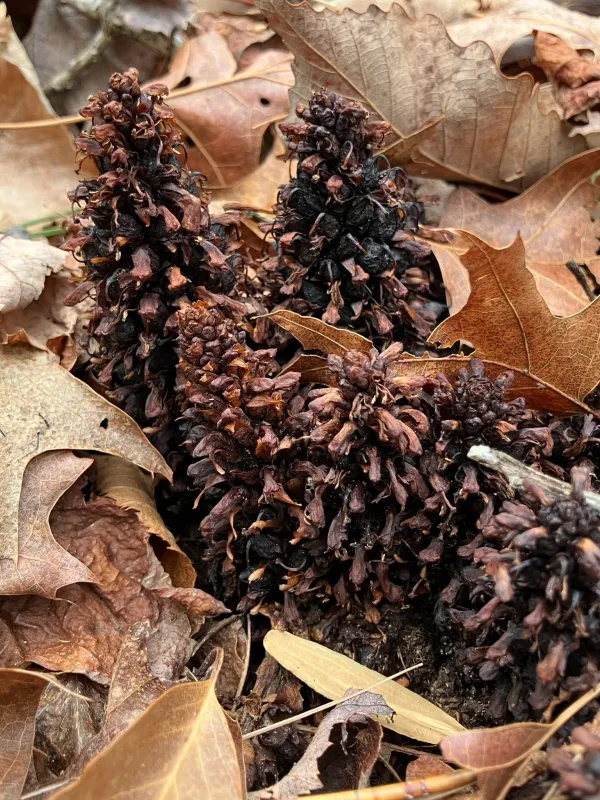
Description
Growing requirements
Conopholis americana, commonly known as squawroot, is a perennial parasitic plant belonging to the Orobanchaceae family. Lacking chlorophyll, it is entirely dependent on its host, primarily species of the Quercus (oak) genus, to obtain water and essential nutrients.
The plant is native to the deciduous forests of eastern North America. Its natural habitat is characterized by mature oak-hickory woodlands, where it attaches to the host's root system through specialized underground structures called haustoria.
Soil requirements for Conopholis americana include well-drained, acidic, and organic-rich substrates. The presence of specific fungal symbionts in the forest floor is often necessary to facilitate the successful attachment to the host tree's roots.
Botanically, the plant is recognizable by its cone-like, fleshy shoots that emerge from the ground in spring. It produces numerous tiny flowers that are pollinated by insects, leading to the development of small seeds that are dispersed in the immediate forest environment.
Due to its obligate parasitic nature, Conopholis americana cannot be farmed or cultivated as a standard agricultural crop. It requires a living host tree to complete its life cycle and is rarely found outside of established, undisturbed forest ecosystems.
Main diseases and pests
The primary threat to the stability of Conopholis americana populations is the large-scale deforestation and removal of old-growth oak trees. Since the plant is inextricably linked to its host, the death of the oak tree leads to the death of the parasite.
Insects that feed on the fleshy tissues of the flowering spikes represent a biological threat, as they can significantly reduce the plant's reproductive output and seed viability within a given colony.
Environmental stressors such as soil compaction and alterations in the forest's hydrological cycle pose significant risks. Changes in moisture availability directly affect the plant's ability to maintain its connection to the host's roots.
While Conopholis americana is not prone to typical agricultural pathogens, it remains vulnerable to the health status of its host tree. If the oak tree is afflicted by diseases or environmental stress, the parasite faces a decline in resource acquisition.
Chemical pollutants or herbicides applied within forest areas can accumulate in the host's root system and be transferred to the parasite. This systemic exposure is highly toxic to the sensitive tissues of Conopholis americana, leading to rapid local population decline.