
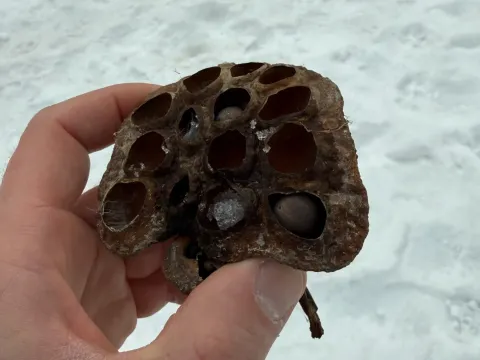
American lotus
Nelumbo lutea
American lotus (Nelumbo lutea) belongs to the Nelumbonaceae family. It is a perennial aquatic plant native to North and Central America, typically found in calm ponds, lakes, and slow-moving rivers.
What the section contains
American lotus
This crop requires warm climates to thrive, with optimal water and air temperatures ranging from 25°C to 30°C. It is highly sensitive to frost, which limits its cultivation potential in colder regions without controlled environments.
The soil should be rich in organic matter, specifically a dense silty sediment found at the bottom of water bodies. The ideal depth of water for the plant is between 0.5 and 1.5 meters, ensuring the rhizomes remain submerged year-round.
Botanically, the plant is known for its large peltate leaves and beautiful, fragrant pale yellow flowers. The root system consists of thick, fleshy rhizomes that spread laterally through the mud.
The American lotus is valued for its culinary uses, as the rhizomes and seeds are starch-rich. Additionally, it serves ecological purposes by filtering water and providing habitat for aquatic fauna.
Propagation of the American lotus is primarily achieved through seeds or the division of dormant rhizomes. Seed germination requires scarification, as the outer seed coat is extremely hard.
Sowing should occur in containers submerged in water once the temperature consistently stays above 20°C. Seeds are placed in a nutrient-rich potting medium to facilitate initial root development.
Rhizome division is best performed in early spring before the growing season starts. Segments containing healthy apical buds are planted into the bottom substrate to establish a new colony.
Young plants need protection from herbivores and strong water currents during the initial stages of establishment in open water bodies.
Proper density must be maintained to ensure each plant receives adequate nutrients and light, promoting a vigorous vegetative spread throughout the season.
The yield of American lotus is determined by the nutrient content of the bottom substrate and the overall health of the water ecosystem. High-fertility environments produce denser stands of the plant.
Rhizome harvesting occurs at the end of the growing cycle when the plant has stored maximum starch reserves. The quantity of harvestable material depends on the age and size of the rhizome bed.
Seed harvesting is conducted when the seed pods turn dark and hard. The seeds are collected, dried, and cleaned for culinary use or further propagation.
Commercial aquaculture practices can significantly improve yields by managing the water quality, nutrient availability, and preventing the overgrowth of competing invasive flora.
Sustainable harvesting ensures that enough rhizomes are left in the substrate for the population to regenerate effectively in the subsequent season.
Common threats include aquatic insects that chew on leaves and snails that can damage emerging shoots, significantly hindering the growth rate of the lotus.
Fungal infections often occur in stagnant water conditions where there is poor oxygenation or an accumulation of decaying organic matter.
Rhizome rot is a significant risk in poorly managed ponds where the substrate becomes anaerobic, leading to the decay of the plant's structural foundation.
Aphids may attack the aerial parts of the plant, necessitating frequent visual monitoring during the hottest months of the summer to prevent infestations.
Effective management includes regular maintenance of the water flow and the removal of dead or rotting vegetation to keep the plant colony healthy and productive.
Harvesting rhizomes is a manual process requiring specialized tools to carefully extract the roots from the silty bottom without causing excessive damage to the surrounding mud.
Post-harvest handling involves thorough cleaning of the rhizomes to remove mud and debris, followed by cooling or drying to preserve their quality.
Seed pods are cut from the stalks, dried in well-ventilated areas, and then threshed to separate the seeds from the pod structure.
It is essential to conduct harvesting with care to preserve the aquatic environment, ensuring the bottom soil remains conducive to future regrowth.
Storage of the harvest requires low humidity and stable temperatures to prevent spoilage, as the high starch content makes the rhizomes susceptible to mold.