
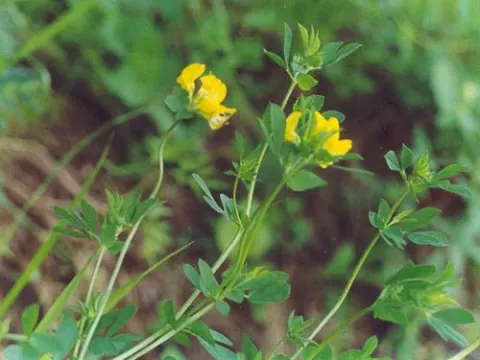
Narrowleaf trefoil
Lotus glaber
Narrowleaf trefoil (Lotus glaber) is a resilient perennial legume known for its ability to thrive where other forage crops struggle. The best time for sowing is early spring, ensuring the soil has sufficient moisture for seed germination.
What the section contains
Narrowleaf trefoil
Fall sowing is also an option, taking advantage of natural moisture cycles and cold stratification. Seeds should be planted at a shallow depth of 1–2 centimeters to ensure they establish well without excessive energy expenditure.
A seeding rate of 8–12 kg per hectare is generally recommended depending on the drilling equipment used. Firming the soil after sowing with a roller helps ensure that seeds have consistent contact with the soil medium.
Growth is somewhat slow during the initial establishment phase, necessitating good weed control. Including the species in long-term pasture mixtures can help stabilize the soil and increase overall yield density.
Proper calibration of the seeding equipment is crucial, as the small size of the seeds requires precise control. Good placement leads to uniform stands that can withstand various environmental stresses effectively.
The primary advantage of Narrowleaf trefoil is its exceptional tolerance to saline, alkaline, and sodic soils. This makes it an ideal candidate for reclaiming or utilizing marginal agricultural lands.
This crop is highly drought-tolerant, maintaining growth during dry periods that would cause other legumes to wilt. It also demonstrates an unusual ability to withstand temporary waterlogging, expanding its range of viable sites.
Light requirements are flexible, though the plant performs best in open, sunlit areas. It can adapt to a wide range of soil pH levels, including highly basic conditions that are prohibitive for most crops.
The root system is robust and capable of deep penetration, allowing the plant to access subsoil moisture. By forming a symbiotic relationship with nitrogen-fixing bacteria, it naturally boosts the fertility of the soil.
Winter hardiness is a key feature, allowing it to survive in regions with significant temperature drops. It serves as a reliable, long-term component in temperate and semi-arid grazing systems.
Yield potential for Narrowleaf trefoil is consistent and reliable under suitable management practices. In productive conditions, the crop can generate 15–25 tonnes of green matter per hectare annually.
Hay production typically ranges from 4 to 6 tonnes per hectare, depending on the number of cuts performed. The nutritional profile remains high, providing a quality source of protein for livestock consumption.
As a grazing crop, it responds well to management, with high regrowth potential after grazing cycles. Its ability to withstand trampling ensures that the pasture remains productive throughout the grazing season.
Well-maintained stands can remain productive for 5–7 years without the need for significant reseeding. Seed yields are dependent on pollinator activity and specific weather patterns during the blooming phase.
Supplemental phosphorus and potassium can enhance yield performance, especially in soils with low baseline fertility. Nitrogen application is generally unnecessary due to its autonomous nitrogen-fixing capabilities.
Narrowleaf trefoil is naturally resistant to most common legume pathogens, reducing the need for aggressive chemical intervention. However, root rots can occur in poorly drained, waterlogged areas for extended durations.
Pests like the clover root curculio can pose a threat to young seedlings if populations are uncontrolled. During the flowering stage, occasional monitoring for aphids or beetles is recommended to protect the potential seed harvest.
Implementing a proper crop rotation strategy is the most effective way to prevent the buildup of soil-borne diseases. Ensuring good air circulation within the stand helps keep moisture levels in check, discouraging fungal growth.
Integrated pest management, including biological controls, is often sufficient to keep harmful insect populations below economic thresholds. Regular scouting is the best practice for maintaining a healthy and profitable crop.
Overall, the plant’s natural hardiness makes it one of the lowest-maintenance forage options available to farmers. Its resilience significantly reduces the risk of crop failure compared to traditional clover species.
Hay harvesting should ideally occur at the onset of flowering to maximize the nutrient density of the biomass. Avoiding late harvests ensures the stems do not become overly lignified, which would lower the forage quality.
Proper drying is essential; gentle handling during the curing process helps retain the leaves, which are the most protein-rich part of the plant. A high-quality hay harvest should maintain a bright green color.
Seed harvesting requires careful timing, as the pods are prone to shattering if left too long. Direct combining is typically employed when the pods have turned dark, signaling maturity.
Post-harvest processing involves cleaning and drying seeds to a stable moisture content to prevent spoilage. Because the seeds often have a hard coat, mechanical scarification may be needed to improve germination rates in future seasons.
Efficient pasture management, including rotation, prevents overgrazing and keeps the forage stand in a highly productive state for years. Adjusting harvest times based on local conditions will optimize both feed value and longevity.