
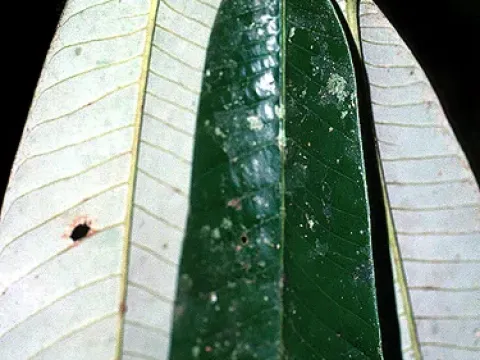
Virola pavonis
Virola pavonis
Virola pavonis is a wild-growing tropical species, and thus it is not subject to industrial sowing in the traditional sense. Reproduction in its natural habitat primarily occurs through seed dispersal by birds and small mammals, which consume the fruits and spread the seeds across the forest floor.
What the section contains
Virola pavonis
For forestry and cultivation purposes, seeds are harvested immediately after ripening, as they lose their viability very quickly. They are typically sown in specialized nurseries with controlled high-humidity conditions to ensure a successful germination rate.
The germination process requires consistent tropical temperatures to trigger growth. Seedlings are kept in nursery containers for approximately 6 to 10 months, receiving regular care until they reach a robust size suitable for transplanting into permanent sites.
When establishing plantations, it is crucial to mimic natural forest density to ensure the young trees develop a straight vertical structure. This spacing helps prevent excessive lateral branching and encourages the tree to invest energy into vertical height growth.
Mulching around the base of the seedlings is a critical agronomic practice to maintain soil moisture. In the early years, the trees are highly sensitive to drought, and stable soil hydration is essential for establishing a strong, healthy root system.
Virola pavonis is an evergreen tree belonging to the Myristicaceae family. Native to the humid rainforests of the Amazon, the species thrives in environments characterized by high air humidity and a lack of distinct dry seasons, which defines its core biological needs.
The tree prefers well-drained, nutrient-rich loam soils. While it flourishes in moist conditions, it cannot tolerate waterlogging or stagnant water around the roots, making site selection crucial for successful long-term cultivation.
The optimal temperature range for stable vegetative growth is between +22 and +28 degrees Celsius. As the plant lacks a distinct dormant period, it is highly sensitive to cold snaps, and maintaining a stable thermal environment is vital for consistent development.
In terms of light, juvenile Virola pavonis specimens require partial shade, mimicking the conditions of the forest understory. As the trees mature, they become more tolerant of direct sunlight, but they continue to perform best in areas with high ambient humidity.
The soil pH should ideally be slightly acidic or neutral to support the tree's metabolism. Protecting the trees from high winds is also necessary, as the branches of younger trees are relatively brittle and can be damaged by strong gusts.
The primary economic value of Virola pavonis lies in its wood, which is appreciated for its texture and workability. Yield is typically measured by the accumulation of woody biomass over a production cycle, which generally spans several decades to reach harvest maturity.
The fruits of the tree are of secondary interest, but they contain fatty oils that have potential applications in the pharmaceutical and cosmetic industries. Harvesting is typically conducted manually as the fruit begins to split, revealing the seeds inside.
The biological growth rate of this species makes it a promising candidate for forest restoration projects. With proper management, the tree can efficiently convert resources into biomass, providing a sustainable source of raw materials when harvested responsibly.
Economic efficiency in plantations is highly dependent on effective density management. Periodic thinning is performed to remove weaker trees, which optimizes light penetration and nutrient availability for the remaining high-quality specimens.
In addition to timber, the bark provides secondary resources such as tannins and alkaloids. Sustainable extraction methods are required to prevent long-term damage to the tree, ensuring that the population remains vigorous and productive over multiple harvesting cycles.
Virola pavonis is vulnerable to various fungal diseases that primarily target the root system when soil drainage is insufficient. These pathogens thrive in high-humidity conditions where air circulation is poor, often leading to rapid decline in seedling health.
Insect pests, particularly wood-boring beetles, represent a major threat to the quality of the timber. Infestations often occur within the trunk, and by the time symptoms are visible on the exterior bark, the structural integrity of the wood may already be significantly compromised.
Defoliating insects can also pose a risk, especially to younger trees, by reducing the leaf surface area available for photosynthesis. This leads to slowed growth rates and increased susceptibility to secondary infections from opportunistic pathogens.
Anthropogenic factors, including habitat degradation and over-exploitation of forest resources, are the most significant threats to the wild population. Active monitoring and conservation efforts are necessary to maintain the genetic diversity of the species.
- Root rot caused by Phytophthora species.
- Wood-boring insect infestations.
- Competition from invasive epiphytic plants.