
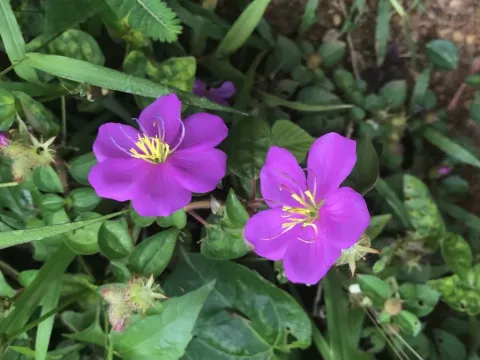
Heterotis
Heterotis
Heterotis, particularly the species Heterotis rotundifolia, is a plant belonging to the Melastomataceae family, native to the tropical regions of Africa.
What the section contains
 Heterotis antennina
Heterotis antennina
Heterotis antennina
 Heterotis canescens
Heterotis cinerascens
Heterotis cinerascens
Heterotis canescens
Heterotis canescens
Heterotis cinerascens
Heterotis cinerascens
 Heterotis decumbens
Heterotis jacquesii
Heterotis jacquesii
Heterotis pobeguinii
Heterotis pobeguinii
Heterotis pygmaea
Heterotis pygmaea
Heterotis rupicola
Heterotis rupicola
Heterotis decumbens
Heterotis decumbens
Heterotis jacquesii
Heterotis jacquesii
Heterotis pobeguinii
Heterotis pobeguinii
Heterotis pygmaea
Heterotis pygmaea
Heterotis rupicola
Heterotis rupicola
Heterotis
As a tropical perennial, its cultivation requires stable environmental conditions, making it suitable for greenhouses or tropical agricultural zones.
Propagation is primarily achieved through seeds or stem cuttings, which should be planted in a warm, humid environment to ensure rapid rooting.
When starting from seeds, it is essential to maintain the soil temperature between +22 and +25 degrees Celsius for successful germination rates.
Timing the planting phase to align with the beginning of the rainy or warm season maximizes the growth potential of the young plants.
This crop thrives in well-draining, nutrient-rich, and slightly acidic soils that can retain enough moisture without becoming waterlogged.
High humidity is vital for Heterotis; therefore, supplemental misting or placement in a humid environment is recommended for optimal plant vigor.
Exposure to bright, filtered sunlight is preferred over direct harsh rays, which can scorch the foliage and hinder the development of the plant.
Regular fertilization with organic-based or liquid balanced nutrients helps maintain the lush growth and supports the development of its characteristic flowers.
The plant is highly sensitive to cold; temperatures falling below +12 degrees Celsius can lead to immediate tissue damage and stunted growth.
Fungal infections, often caused by excessive soil moisture and poor airflow, are the primary disease threats to healthy Heterotis stands.
Insects like spider mites and aphids are known to attack the plant during periods of drought or when the surrounding air is too dry.
Root rot is a significant concern in cultivation, usually caused by improper soil aeration and the accumulation of standing water around the roots.
Monitoring for signs of nutrient deficiency, such as leaf yellowing, is essential to adjust the feeding program before the plant loses its vitality.
- Implementation of a strict irrigation schedule.
- Ensuring good ventilation in greenhouse environments.
- Prompt isolation of infected specimens.