
Heterotis decumbens
Heterotis decumbens
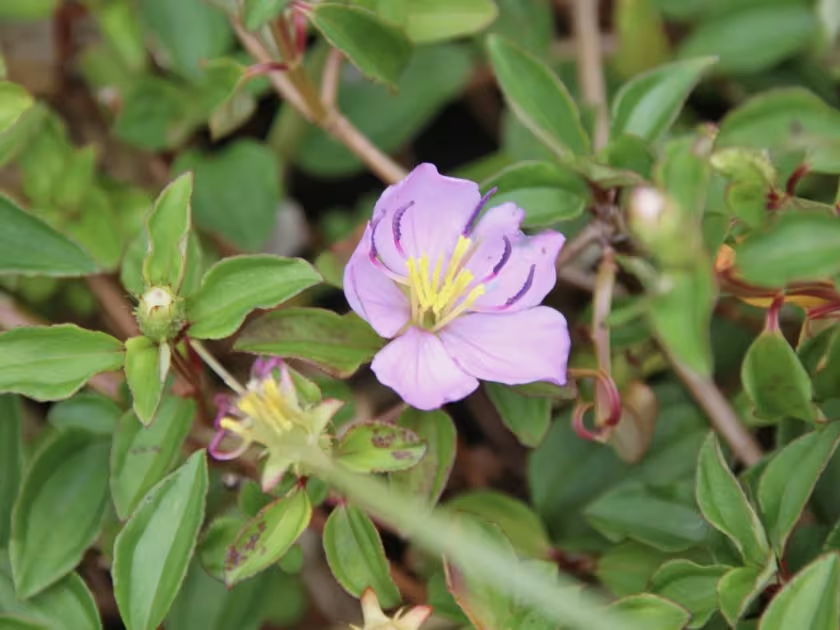
Description
Sowing dates
Sowing Heterotis decumbens seeds is best accomplished in a controlled greenhouse environment during early spring. The optimal temperature for germination is between 20 and 24 degrees Celsius, which encourages rapid seedling development.
The substrate for sowing must be light and airy, consisting of a mix of peat moss and perlite to prevent compaction. Seeds should be sown on the surface and pressed slightly into the soil, as light is essential for their germination process.
Maintaining high humidity is crucial during the early stages of growth. Growers often use clear covers or plastic films to create a greenhouse effect, ensuring that the moisture level remains constant without saturating the soil.
Propagation through stem cuttings is a more reliable method for agricultural production. Healthy stems, roughly 10-12 centimeters in length, should be cut and planted in a moist, sterile medium to promote root formation.
Seedlings or rooted cuttings should be spaced appropriately to allow for sufficient airflow, which is a critical measure to prevent fungal diseases as the plants begin to spread laterally.
Growing requirements
As a member of the Melastomataceae family, Heterotis decumbens thrives in tropical-like conditions. It requires bright, indirect sunlight to maintain its signature vibrant appearance and healthy growth rates.
Soil composition should be slightly acidic, well-draining, and rich in organic matter. Avoid heavy clay soils that may trap excess moisture and lead to root asphyxiation, a common issue in poorly maintained crops.
Watering practices must be balanced to maintain consistent soil moisture without causing waterlogging. Using rainwater or softened water is generally preferred to avoid mineral accumulation in the growing medium.
Temperature stability is vital for the physiological well-being of the plant. It does not tolerate cold drafts or temperatures consistently below 15 degrees Celsius, which can stunt its growth and damage leaf tissue.
Regular fertilization with a balanced, water-soluble fertilizer is recommended during the peak growing season. This ensures that the plant has access to the macro and micronutrients needed for continuous vegetative development.
Yield
The yield of Heterotis decumbens is typically measured in terms of vegetative mass for ornamental or secondary usage. Proper spacing and consistent nutrition allow for maximum coverage and biomass production.
Under optimal conditions, the plant displays a rapid expansion rate. Regular pruning can stimulate denser branching, effectively increasing the total harvestable material from each plant unit.
Agricultural productivity can be enhanced through the strategic application of growth promoters in the early stages of the season, which helps in establishing a strong root and stem architecture.
When grown for seeds, harvesting should be done once the seed pods begin to dry out. Careful handling is required to avoid premature shattering of the pods and loss of the precious seed crop.
Post-harvest management involves drying the harvested material in a well-ventilated area away from direct sunlight to maintain the quality and viability of the collected crop parts.
Main diseases and pests
Common threats to Heterotis decumbens include root rot caused by pathogens like Pythium or Phytophthora. These are largely preventable by ensuring excellent drainage and avoiding over-irrigation.
Pests such as spider mites and aphids are frequently observed in drier environments. Early detection through regular crop scouting is the most effective way to manage these populations before they cause damage.
Fungal leaf spots may occur if air circulation is insufficient within the planting area. Improving plant spacing and reducing humidity levels can effectively mitigate these risks without heavy chemical use.
If chemical interventions are necessary, choosing systemic fungicides and insecticides that are safe for the specific crop variety is essential for protecting the overall health of the cultivation area.
Integrated Pest Management (IPM) practices, such as the introduction of beneficial predatory insects, are highly recommended to keep pest populations at bay while promoting sustainable farming.