
Koster's curse
Clidemia hirta (L.) D. Don
Description
Growing requirements
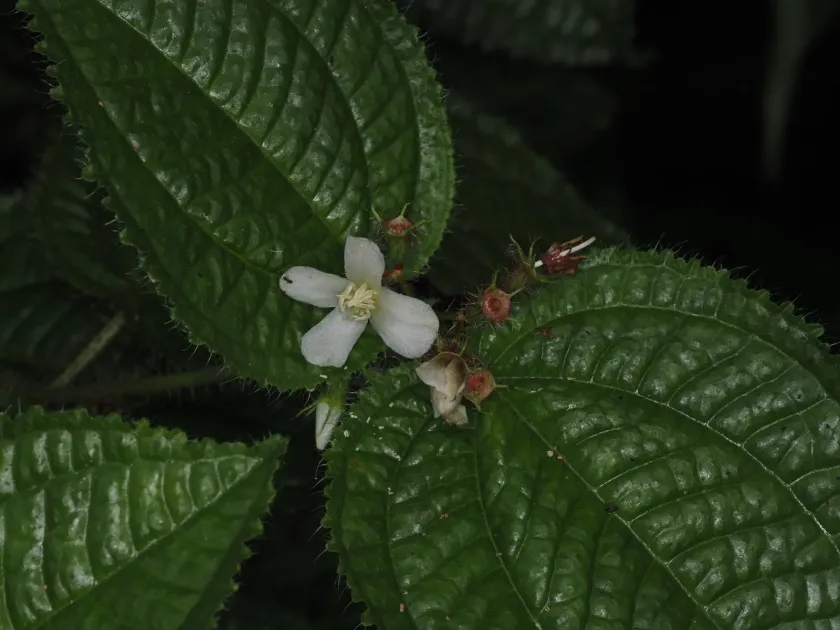
Clidemia hirta, commonly known as Koster's curse, is a perennial shrub belonging to the Melastomataceae family. It is native to the tropical regions of Central and South America and the Caribbean islands.
This plant is globally recognized as a significant invasive species. It thrives in high-humidity tropical environments, often colonizing disturbed habitats, forest clearings, and agricultural lands.
The plant features distinctive hairy leaves and small, white, clustered flowers. It is highly adaptable to various soil types, provided there is sufficient moisture, making it a persistent agricultural weed.
Botanically, it grows as a woody shrub reaching heights of up to 3 meters. Its rapid growth rate and ability to outcompete native vegetation make it a primary concern for land managers and agronomists.
Reproduction occurs primarily through seeds, which are efficiently dispersed by birds, small mammals, and through human activities, leading to widespread infestation in tropical climates.
Main diseases and pests
Managing this invasive shrub is challenging due to its rapid regrowth capabilities and high seed output. Mechanical removal requires extracting the entire root system to prevent sprouting.
Chemical control using systemic herbicides is a common practice in agricultural landscapes, although it must be applied carefully to avoid damaging desirable crops.
Biological control programs have been implemented in various countries, using host-specific insects like the thrip Liothrips urichi to reduce the density of the weed population.
Integrated pest management is recommended, combining regular monitoring of land with manual removal and controlled applications of herbicides during the active growth phase.
- Monitor land areas frequently.
- Prioritize removal of young plants.
- Dispose of plant material properly to prevent seed dispersal.