
Death camas
Toxicoscordion venenosum
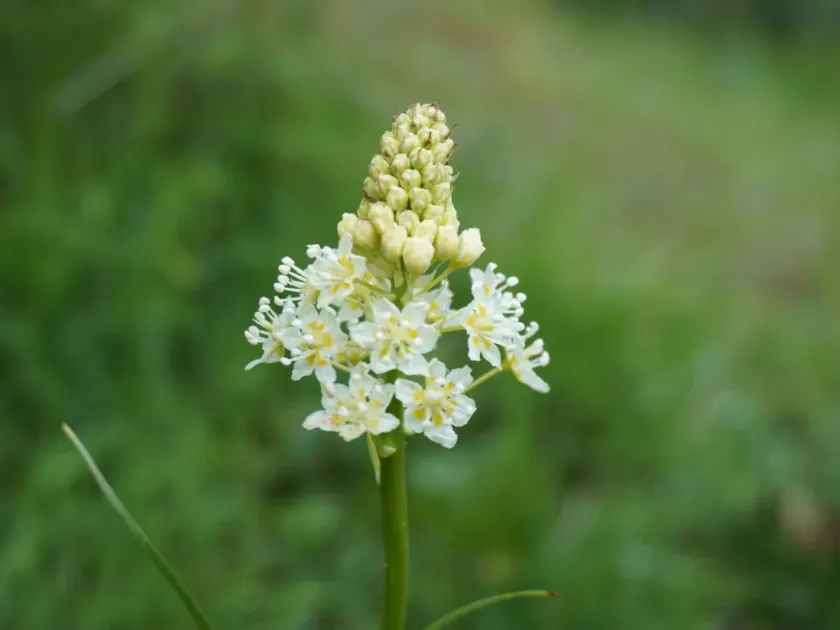
Description
Growing requirements
Toxicoscordion venenosum, commonly known as death camas, belongs to the Melanthiaceae family. It is a perennial bulbous plant native to the western regions of North America, typically found in diverse ecosystems ranging from meadows to arid slopes.
The plant thrives in well-drained soils and is highly adaptable to various ecological conditions, including rocky or heavy clay substrates. It is known for its ability to persist in harsh environments where other vegetation might struggle.
Climate requirements for this species are centered around temperate cycles. It prefers areas with wet, cool springs followed by dry summers, which aligns with its life cycle as an early-season ephemeral plant.
Botanically, it features narrow, grass-like leaves and a dense raceme of small, creamy-white flowers. The underground bulb is the primary storage organ, allowing the plant to remain dormant during unfavorable seasons.
In agricultural settings, it is strictly classified as a hazardous weed. It is not cultivated for any commercial purpose and is generally managed as a threat to livestock safety in grazing regions.
Main diseases and pests
The primary concern regarding this plant is its high toxicity to livestock, specifically sheep and cattle. The presence of steroidal alkaloids makes ingestion lethal even in small quantities.
Symptoms of toxicity include rapid breathing, drooling, tremors, and in severe cases, heart failure. Because of the rapid onset of clinical signs, immediate removal of livestock from infested pastures is the only effective management strategy.
Weed management involves manual digging of bulbs in small areas or cautious application of herbicides, although eradication is difficult due to the plant's deep-seated bulbs and rapid spread via seeds.
The species is remarkably free from common agricultural diseases and pests. Its inherent toxicity serves as an effective biological defense mechanism, deterring most herbivores and insects.
Crop loss due to this weed is primarily indirect, as pastures infested with it must be closed off to prevent animal fatalities, thereby reducing the total available grazing land for agricultural operations.