
Toxicoscordion nuttallii
Toxicoscordion nuttallii
Description
Growing requirements
Toxicoscordion nuttallii, commonly known as Nuttall's death camas, is a perennial herbaceous bulbous plant belonging to the Melanthiaceae family. In an agricultural context, this plant is not a crop but rather a significant weed that poses a danger to rangelands due to its highly toxic properties.
The native distribution of this species is confined to the south-central regions of the United States, including Oklahoma, Texas, and parts of Arkansas. It is typically found in prairies, open woodlands, and areas characterized by rocky or limestone-based soils that offer excellent drainage and low organic content.
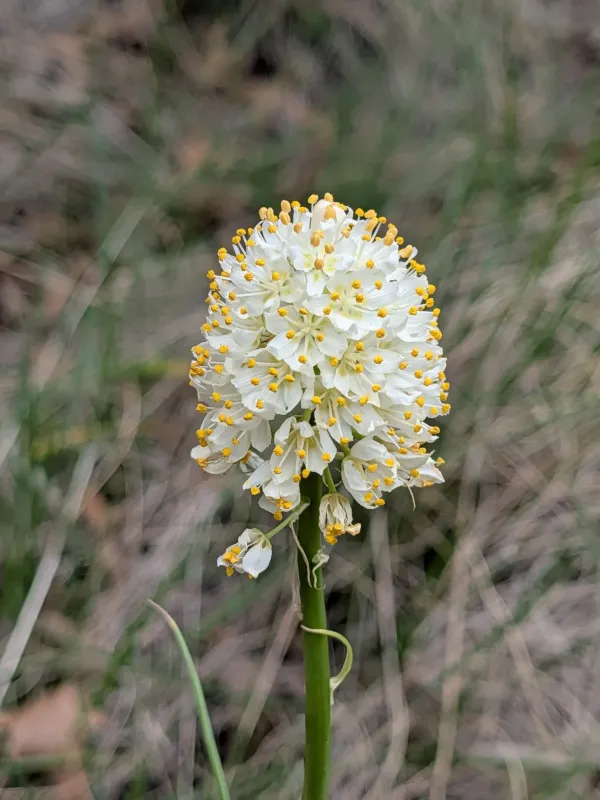
Botanically, it features a bulb that stores nutrients for dormancy. The foliage consists of long, narrow, grass-like leaves that emerge in early spring. The inflorescence is a terminal raceme of small, cream-colored, or greenish-white star-shaped flowers, which makes the plant easily recognizable during its flowering phase.
Regarding climate adaptation, the plant is highly resilient to continental climate shifts, surviving hot and dry summers by entering dormancy. It requires sufficient moisture during the spring months to complete its growth cycle before the onset of the intense heat typical of its native habitat.
The primary agricultural challenge associated with Toxicoscordion nuttallii is its high toxicity to livestock. The plant contains complex alkaloids, specifically zygacine, which are poisonous to cattle, sheep, and horses. Because it is often one of the first plants to green up in early spring, animals may inadvertently consume it when forage is scarce, leading to severe illness or death.