
Marsh deathcamas
Toxicoscordion fontanum
Description
Growing requirements
Marsh deathcamas (Toxicoscordion fontanum) is a perennial herbaceous plant belonging to the Melanthiaceae family. It is not a standard agricultural crop; rather, it is recognized as a toxic species that poses significant challenges in grazing management.
The native range of this species is restricted to specific regions in North America, particularly wetlands, seepage slopes, and marshy meadows. It thrives in high-moisture environments where the water table remains consistently near the surface.
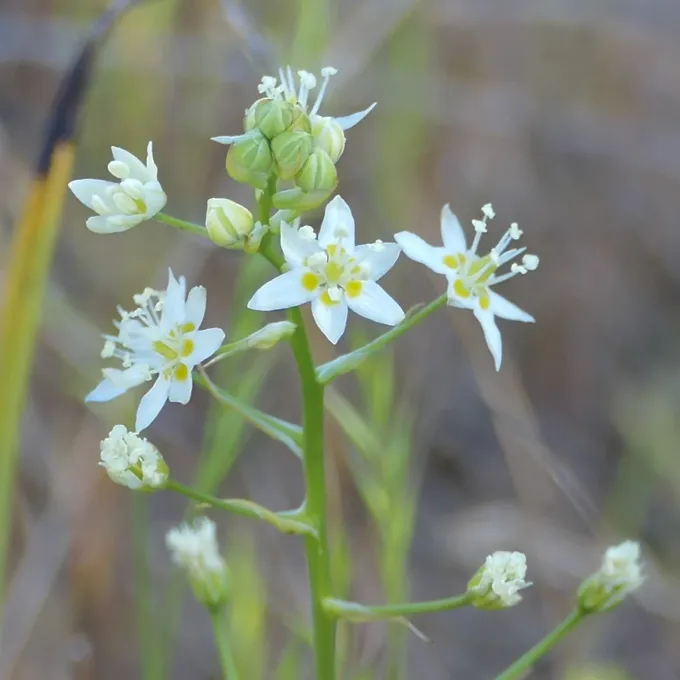
Botanically, the plant features a bulbous root system, linear leaves, and a terminal raceme of flowers. It completes its lifecycle within one growing season, typically displaying its inflorescence in late spring or early summer.
Environmental requirements include saturated soils rich in organic matter. The species is highly specialized for wetlands and lacks the physiological mechanisms to survive in arid environments or areas with significant soil moisture fluctuations.
Economic use is non-existent in traditional agriculture due to the presence of potent alkaloids. It is regarded as a hazardous plant that must be managed or eradicated from pastures to prevent livestock poisoning and fatalities.
Main diseases and pests
Threats to this species are primarily environmental, driven by habitat loss and drainage of wetlands. Altering the local hydrology can lead to the rapid decline of localized populations that rely on constant soil saturation.
Pests such as specialized beetles and lepidopteran larvae may feed on the foliage. Despite the presence of toxic compounds, these insects have evolved mechanisms to sequester or detoxify the plant's harmful alkaloids.
Fungal infections, specifically those targeting bulb integrity, are a risk in waterlogged soils with poor aeration. Excessive moisture without movement can exacerbate the development of these soil-borne pathogens.
Leaf spot diseases can occur during prolonged periods of humidity, affecting the photosynthetic capacity of the plant. These diseases are generally mild but can be detrimental to stressed or aging populations.
Viruses transmitted by aphids can interfere with normal development, leading to stunted growth. While not immediately lethal, these infections significantly reduce the plant's ability to store resources in its bulb for the following season.