
Mogollon death camas
Anticlea mogollonensis
Description
Growing requirements
Anticlea mogollonensis, commonly referred to as the Mogollon death camas, is a perennial bulbous plant belonging to the Melanthiaceae family. It is a rare species known for its specific ecological niche and unique morphological adaptations to mountainous environments.
The plant is native to the southwestern United States, with its range centered primarily in the Mogollon Mountains. It typically thrives in moist meadows, riparian zones, and forested areas where the soil remains consistently damp during the growing season without becoming waterlogged.
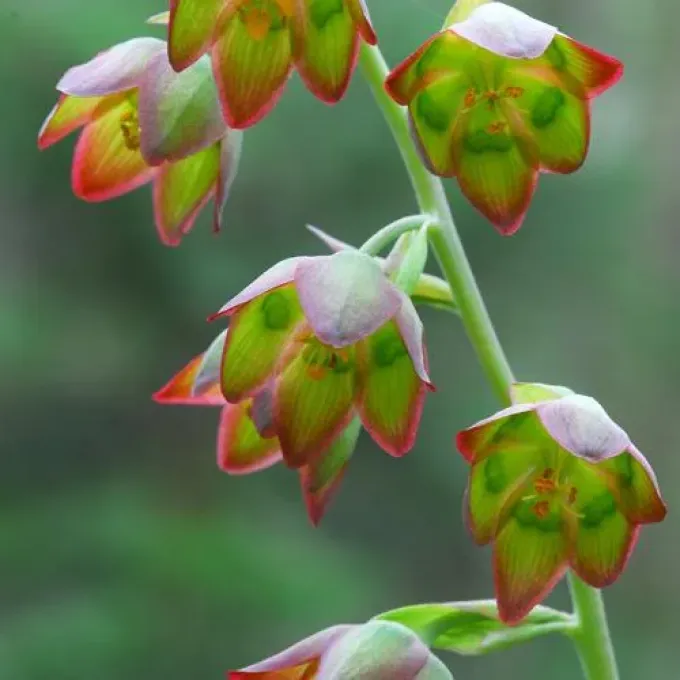
Morphologically, the plant features a basal rosette of grass-like leaves and an inflorescence that bears several small, starry, cream-colored flowers. The development of the bulb allows the plant to survive harsh winter dormancy, emerging quickly when conditions become favorable in the spring.
Cultivation requirements involve providing well-drained, nutrient-rich soil that mimics the rocky, high-altitude substrate of its native habitat. It is essential to ensure that the site receives partial sun, as direct, intense desert sunlight can lead to desiccation of the foliage.
In terms of agricultural or commercial use, this species is primarily maintained for conservation purposes and botanical education. Because members of this genus can contain toxic alkaloids, it is strictly categorized as a non-forage plant and is not utilized in standard livestock agriculture.