
Anticlea elegans
Anticlea elegans
Description
Growing requirements
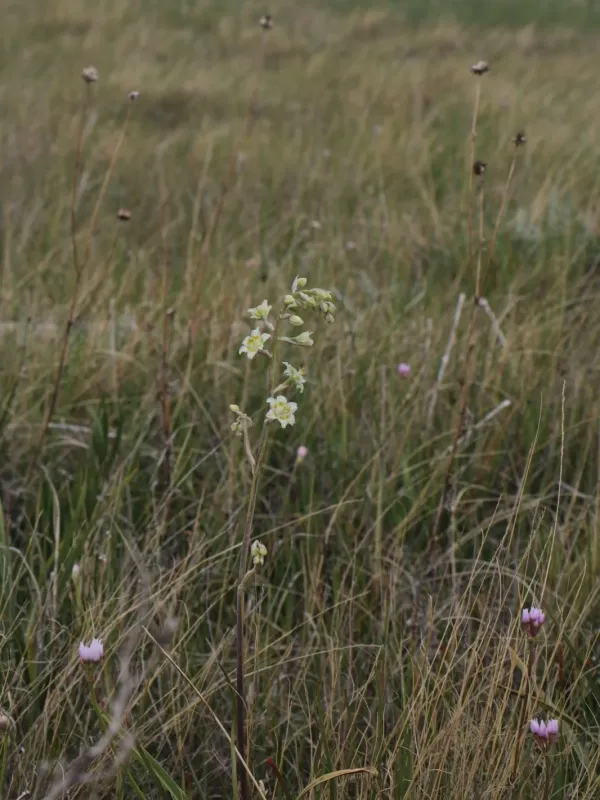
Anticlea elegans, commonly known as mountain deathcamas, is a perennial bulbous plant belonging to the Melanthiaceae family. It is native to North America, widely distributed across various habitats ranging from Alaska to Northern Mexico.
The plant thrives in regions with moderate moisture and well-drained, alkaline-rich soils. It is naturally adapted to rocky slopes, meadows, and gravelly substrates, making it an excellent candidate for specialized rock garden landscaping.
Botanically, it features a cluster of linear leaves and a tall, slender inflorescence bearing small, greenish-white or creamy flowers. The bulbs are perennial and dormant during the winter, requiring protection from excessive winter wetness.
Optimal cultivation requires full sun exposure to semi-shade conditions. The soil must be porous; in heavier clay soils, the addition of grit or coarse sand is essential to prevent bulb rotting during the dormant phase.
Due to its elegant appearance and low-maintenance requirements once established, it is highly valued by enthusiasts of native flora and alpine gardening as a unique accent plant.
Main diseases and pests
Like many members of the Melanthiaceae family, Anticlea elegans contains toxic alkaloids, which generally protects it from many herbivores. However, it remains susceptible to environmental-driven diseases.
The most common threat is bulb rot caused by waterlogged soil conditions. Poor drainage is the primary enemy of this species, leading to fungal infections that can destroy the root system very rapidly.
Gastropods such as slugs and snails may graze on the foliage in humid conditions. Protecting the plant with grit barriers around the base can effectively discourage these pests from reaching the succulent leaves.
While the plant is hardy, it can be sensitive to rapid fluctuations in soil temperature. Providing adequate mulch can help stabilize the soil environment during early spring, protecting the emerging shoots.
Regular sanitation of the planting area is recommended to prevent the buildup of pathogens. Removing debris and maintaining air circulation around the plant will significantly reduce the risk of mold and bacterial issues.