
Lawrencia glomerata
Lawrencia glomerata
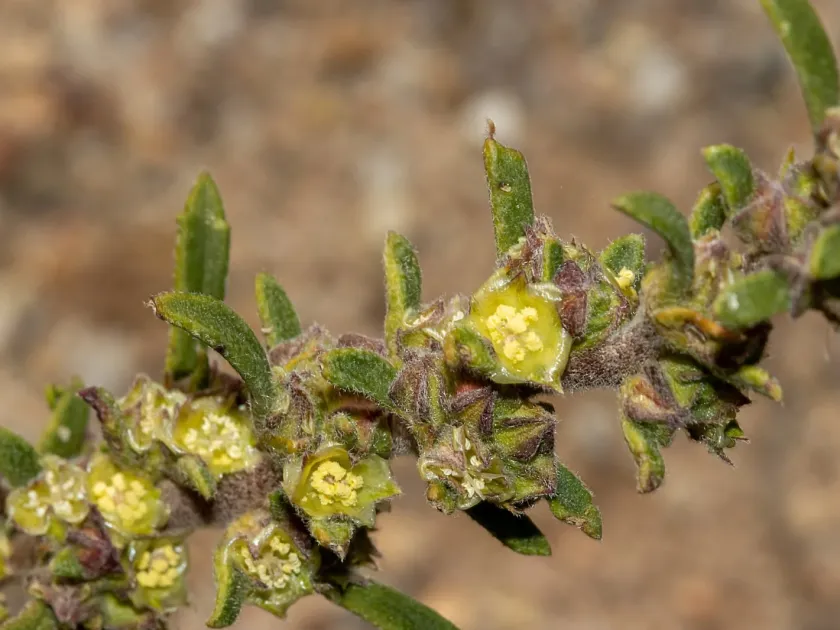
Description
Growing requirements
Lawrencia glomerata is a distinctive herbaceous perennial plant belonging to the Malvaceae family. It is highly specialized for growth in harsh, saline-rich environments that are typical of arid Australian landscapes.
This species acts as a halophyte, an organism that thrives in salty soil conditions. Its evolutionary adaptations allow it to process and manage high levels of salinity that would prove toxic to most conventional agricultural crops.
The plant requires full sun exposure and is highly tolerant of prolonged drought periods. Its roots are capable of penetrating deep into the soil layers to access moisture, which is critical for survival in the desert-like habitats of its native range.
Regarding soil preferences, Lawrencia glomerata favors substrates with high pH levels and significant concentrations of sodium and magnesium. It thrives where other vegetation struggles, making it an excellent candidate for reclaiming challenging soil environments.
Cultivation practices for this species emphasize minimal disturbance. Since it is a native desert plant, it does not respond well to heavy irrigation or high-nitrogen fertilization, which can actually inhibit its natural physiological mechanisms.
Yield
The yield of Lawrencia glomerata is primarily assessed in terms of biomass production for livestock grazing. It serves as a resilient food source in regions where traditional fodder plants cannot grow.
During wetter intervals within arid seasons, the plant displays robust vegetative regrowth. This regenerative capacity is a key feature that supports its use in rotational grazing systems on saline rangelands.
Yield stability is high due to the plant's resistance to environmental stress, including high heat and soil salinity. This makes it a reliable, albeit slow-growing, component of marginal land agriculture.
Seed harvesting remains challenging due to the specific structure of the glomerules, which are designed for natural dispersal in desert conditions rather than mechanized collection.
Future research into the yield potential of this plant focuses on optimizing its nutritional value for sheep and cattle, exploring how different salinity levels affect its leaf chemistry and digestibility.