
Kosteletzkya virginica
Kosteletzkya virginica
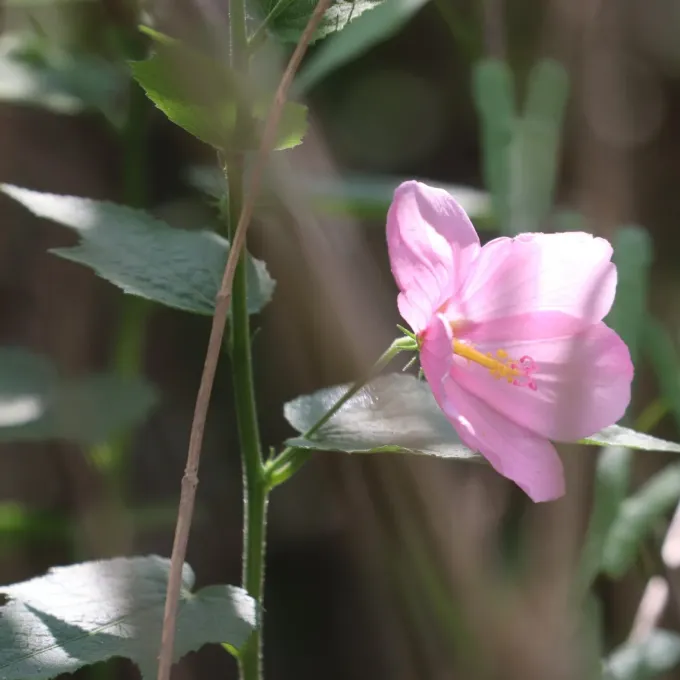
Description
Sowing dates
Kosteletzkya virginica, also known as Virginia saltmarsh mallow, is a perennial herbaceous plant belonging to the Malvaceae family. Seeds are typically sown in early spring once soil temperatures reach a consistent level suitable for germination.
Proper seedbed preparation is essential to ensure good soil-to-seed contact, as the seeds require sufficient moisture to initiate the germination process successfully.
Sowing should be done at a shallow depth of 2 to 3 centimeters to prevent the seedlings from exhausting their energy reserves before emerging through the soil surface.
Spacing between rows is usually maintained at about 70 centimeters to allow for adequate ventilation and to facilitate mechanical weed control between plants during the early stages.
As a perennial crop, it establishes a deep and extensive root system in the first year, which enables it to withstand varying environmental conditions in subsequent seasons.
Growing requirements
This crop is highly valued for its exceptional salt tolerance, making it an ideal candidate for reclaiming marginal, saline soils where traditional crops often fail.
While it thrives in moist conditions and can tolerate occasional flooding, it also performs well in well-drained soils, showing a remarkable adaptability to different landscapes.
Abundant sunlight is critical for its growth, as the plant requires high solar radiation to maximize biomass production and support the development of seeds rich in oil.
Nutrient requirements are relatively moderate, but nitrogen and phosphorus fertilization can significantly boost the overall yield of both seeds and aerial biomass.
The climate should provide a sufficiently long growing season, as the plant needs warm temperatures to fully mature its seeds and accumulate the necessary oil content.
Yield
The economic potential of Kosteletzkya virginica lies in its seeds, which contain high-quality oil suitable for biofuels, as well as its biomass which is rich in fiber.
Expected seed yields typically range from 1.5 to 2.5 metric tons per hectare, depending on the level of soil salinity, irrigation, and overall agricultural management practices.
The stalks of the plant are a significant source of cellulose, making them suitable for use in the paper and pulp industry or as a raw material for renewable energy sources.
Because the plant is perennial, it offers the advantage of multiple harvests over several years, reducing the need for annual land preparation and planting costs.
The stability of the yield across different soil types makes this crop a highly reliable option for sustainable agricultural diversification in saline-prone regions.
Main diseases and pests
Kosteletzkya virginica exhibits strong natural resistance to many common agricultural pests and diseases, which helps in reducing the reliance on chemical pesticides.
Early-stage seedlings can be vulnerable to insect herbivory or weed competition, necessitating careful field monitoring during the first few weeks after emergence.
Poor drainage combined with high humidity can occasionally encourage fungal issues, so ensuring proper field management and ventilation is essential for healthy plant development.
Mechanical cultivation between rows is often sufficient to control competing weeds, which is an environmentally friendly alternative to extensive herbicide application.
Crop rotation protocols should be followed to avoid proximity to other Malvaceae family members, minimizing the risk of host-specific pest outbreaks in the field.
Harvesting
Harvesting usually takes place in late autumn when the seed capsules have fully matured, dried out, and turned brown, indicating the optimal moisture levels for collection.
Combine harvesters can be adjusted to thresh the capsules efficiently, ensuring that seeds are collected with minimal mechanical damage or shattering losses in the field.
If the goal is biomass production, the harvesting of stalks is typically performed after the growing season has concluded, followed by chopping for easier handling and storage.
Post-harvest processing involves cleaning and drying the seeds to a moisture content of approximately 10 percent to ensure high stability and quality during storage.
The final product should be kept in cool, dry, and well-ventilated conditions to prevent any degradation of oil quality and to ensure long-term shelf life for industrial use.