
Herrania purpurea
Herrania purpurea
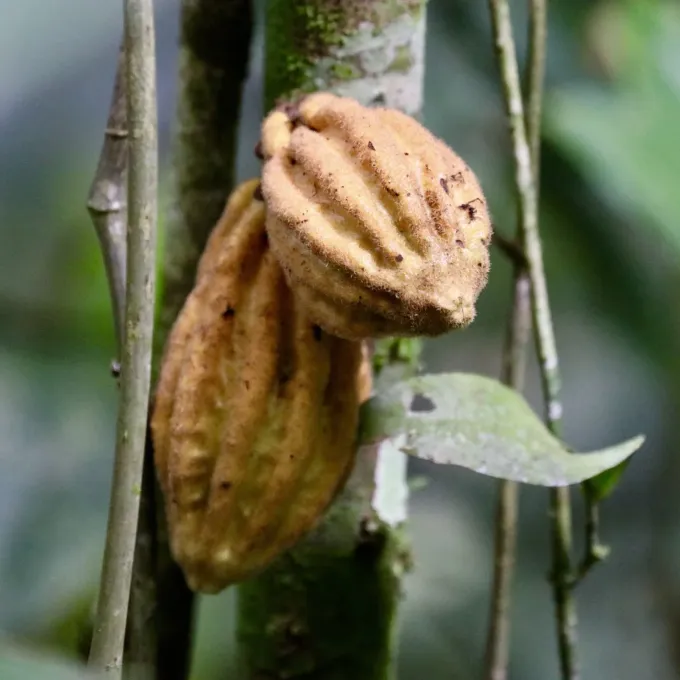
Description
Growing requirements
Herrania purpurea, known as monkey cacao, is a tropical tree belonging to the Malvaceae family. It is a shade-loving species native to the rainforests of South America, typically found in the understory of dense forests.
The plant thrives in humid equatorial climates. It requires consistent temperatures ranging between 22 and 28 degrees Celsius, without significant fluctuations. Protection from direct, intense sunlight is essential for the health of young saplings.
Regarding soil requirements, the species prefers deep, fertile, and well-drained soils rich in organic matter. Waterlogged soil is detrimental, as it encourages root rot and other fungal diseases, which are the primary threats to this plant.
The botanical structure of Herrania purpurea is defined by its cauliflorous nature. The flowers and fruits develop directly on the woody trunk, an evolutionary trait that facilitates pollination by insects dwelling in the lower canopy levels.
Agrotechnical management includes maintaining high air humidity and providing adequate shelter. In sustainable agroforestry systems, it is often intercropped with larger canopy trees that provide the necessary microclimate conditions for optimal development.
Yield
The economic and dietary use of Herrania purpurea centers on its fruits. The pulp surrounding the seeds has a pleasant, sweet-and-sour flavor and is consumed fresh, while the seeds themselves are processed for various local culinary purposes.
While not as widely grown as Theobroma cacao, this species serves as a vital genetic resource. Its resistance to certain environmental stresses makes it a subject of interest for breeders seeking to improve the resilience of related cacao species.
Yield capacity depends heavily on the maintenance of the tree and the quality of the soil. A mature tree can yield a significant quantity of pods per year if the nutrient balance in the soil is strictly controlled and moisture levels remain stable.
Harvesting is performed manually due to the specific position of the pods on the trunk. Careful handling is required to avoid damaging the bark, which could open entry points for pests or fungal spores during the post-harvest period.
The culture is increasingly valued in organic farming markets. Because the plant requires a diverse forest environment, it contributes to biodiversity conservation, making its fruits attractive to consumers seeking environmentally friendly products.
Main diseases and pests
Fungal pathogens represent the most significant threat to Herrania purpurea plantations. High humidity, while necessary for growth, can promote the spread of pathogens that target the vascular system of the trunk and branches.
Pests such as mealybugs and various scale insects pose a regular problem for the plant's foliage and developing fruit clusters. Management involves periodic inspections and the use of insecticidal soaps or biological control agents.
Fruit flies can cause substantial losses during the ripening phase. Effective prevention strategies include the strict removal of fallen fruit, which provides a breeding ground for pests, and the use of protective netting on clusters where possible.
Nutrient deficiency, particularly magnesium and nitrogen, can lead to leaf yellowing and a reduction in fruit set. Regular application of organic mulch and compost is the recommended method to maintain soil fertility without the need for synthetic chemicals.
Overcrowding within plantation blocks can lead to increased disease transmission. To minimize these risks, farmers should maintain adequate spacing between trees to ensure proper air circulation and sunlight penetration in the understory.