
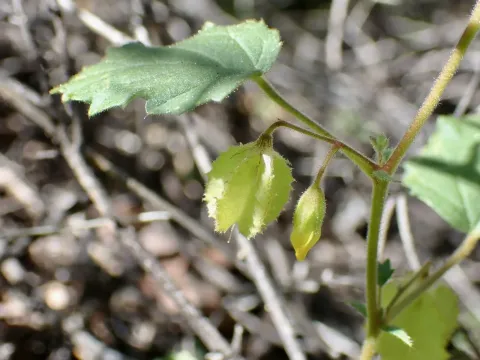
Hermannia pauciflora
Hermannia pauciflora
Hermannia pauciflora is a resilient perennial subshrub belonging to the Malvaceae family. This species is highly adapted to the arid environments of Southern Africa, thriving in regions where moisture availability is consistently low.
What the section contains
Hermannia pauciflora
Botanically, the plant is characterized by its compact growth habit and pubescent foliage, which serves as a physiological adaptation to reduce transpiration. Its root system is deep and expansive, allowing it to tap into subterranean water sources.
Regarding soil requirements, the species flourishes in well-drained, sandy, or rocky substrates. It is exceptionally sensitive to waterlogging, which can cause rapid decay of the taproot and lead to total crop failure.
The plant demonstrates significant tolerance to high solar radiation and extreme heat. In agricultural systems, it serves as a valuable forage crop that maintains its nutritional integrity under stressful environmental conditions.
Cultivation requires minimal intervention once the plants are established. The key to successful development is ensuring the soil remains porous and oxygenated, as this plant is strictly adapted to well-drained ecological niches.
Root rot remains the most critical threat to Hermannia pauciflora. This pathology is primarily associated with improper drainage or excessive irrigation regimes, which disrupt the plant's natural adaptation to dry conditions.
Fungal leaf spots may occur in environments with high humidity levels. Management strategies involve ensuring adequate spacing between individual plants to facilitate proper airflow and reduce moisture accumulation on leaves.
Pests, particularly sap-sucking insects, may occasionally affect young shoots. However, the plant's robust secondary metabolite profile often provides a natural defense against many common agricultural pests.
Overgrazing poses a severe risk to the longevity of stands. If the plant is continuously harvested without recovery periods, the depletion of root carbohydrate reserves leads to reduced vitality and increased susceptibility to pathogens.
The introduction of invasive weeds in the vicinity can compete for nutrients and moisture. Regular weeding in the early stages of establishment is recommended to ensure the plant gains a competitive edge in the field.