
Alyogyne huegelii
Alyogyne huegelii (Endl.) Fryxell
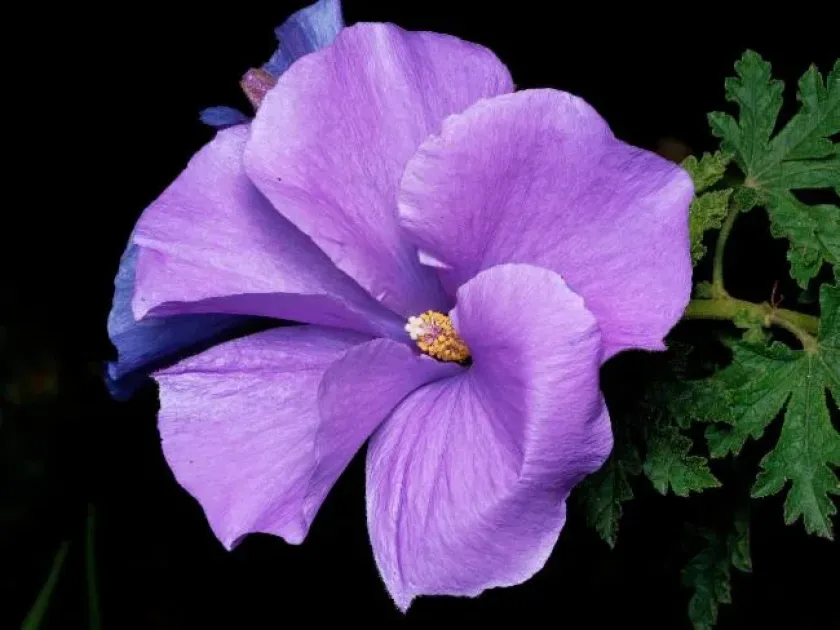
Description
Sowing dates
Propagation of Alyogyne huegelii is primarily achieved through seeds or semi-hardwood cuttings taken during the active growing season.
Seeds should be sown in a well-draining, sterile potting mix; lightly covering them with medium ensures optimal conditions for germination at room temperature.
Cuttings are often preferred for cloning specific traits; they should be harvested in late spring and placed in a humid environment to promote root development.
Once roots have established, seedlings or cuttings require gradual hardening off before being transplanted to their permanent outdoor location.
Proper spacing is crucial when planting to ensure adequate airflow, which is vital for preventing the development of fungal pathogens during the early stages.
Growing requirements
Alyogyne huegelii, commonly known as Lilac Hibiscus, belongs to the Malvaceae family and is native to the coastal and inland regions of Western Australia.
The plant thrives in full sun exposure, which is necessary for the production of its signature large, violet-lilac flowers throughout the warmer months.
Soil quality must be sandy or loamy with exceptional drainage; the plant is highly sensitive to waterlogging, which often leads to root collar rot.
While the plant displays moderate drought tolerance once established, consistent moisture is beneficial for producing vibrant blooms during peak summer heat.
Temperature management is key; it is not frost-hardy and should be sheltered or brought indoors in regions experiencing temperatures below freezing.
Main diseases and pests
Root rot is the most significant threat to the health of the plant, usually triggered by poor soil aeration or excessive watering in cooler weather.
Spider mites are common pests in greenhouse conditions or areas with low humidity, causing stippling on leaves and loss of overall plant vigor.
Aphids can congregate on tender new growth and flower buds, potentially vectoring viruses and reducing the aesthetic quality of the shrub.
Powdery mildew may occur if the plant is kept in areas with poor ventilation or high humidity, necessitating fungicidal intervention if caught late.
Regular pruning after the flowering phase helps maintain structural integrity and removes potential sites for pest infestations and disease accumulation.