
Hybrids of Alyogyne hakeifolia and Alyogyne huegelii
Hybrids between Alyogyne hakeifolia and Alyogyne huegelii
Description
Growing requirements
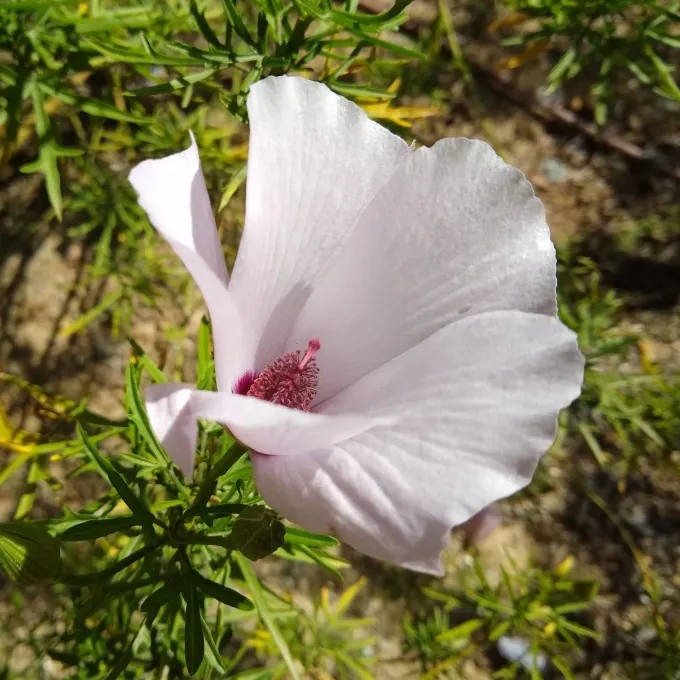
Hybrids between Alyogyne hakeifolia and Alyogyne huegelii are ornamental shrubs belonging to the Malvaceae family. These plants combine the distinctively dissected leaves of A. hakeifolia with the large, showy, hibiscus-like flowers of A. huegelii, resulting in highly attractive specimens for temperate gardens.
Originating from the arid zones of Australia, these hybrids are naturally adapted to dry conditions and high solar radiation. For optimal growth, they require full sun exposure, which ensures robust flowering and prevents the plants from becoming leggy or weak-stemmed.
Regarding soil requirements, these plants demand excellent drainage. They are susceptible to root rot if grown in heavy or waterlogged soil. A loose, sandy-loam substrate with a slightly acidic to neutral pH is ideal for promoting healthy root development and overall plant vigor.
These hybrids are sensitive to severe frosts. In regions where temperatures drop below freezing, they must be protected or cultivated in pots to be moved indoors during winter. Proper air circulation is essential, especially for potted specimens, to prevent humidity-related issues.
Maintenance practices center on periodic pruning after the flowering cycle. This is crucial for maintaining a compact habit, encouraging denser branching, and stimulating the production of new growth for the next blooming season. Careful management of water is key to preventing physiological stress.
Main diseases and pests
Root rot pathogens, particularly those from the Phytophthora genus, represent the most significant threat to Alyogyne hybrids. These fungi thrive in wet, stagnant conditions, making irrigation management the primary preventive measure for the long-term survival of the plants.
Pests such as aphids and spider mites frequently affect the foliage, especially in greenhouse conditions or during periods of low humidity. These insects feed on the plant sap, causing stunted growth, yellowing of leaves, and potential transmission of secondary viral infections.
Powdery mildew is a common fungal threat when plants are grown in poorly ventilated areas. High humidity combined with fluctuating temperatures facilitates the spread of spores, covering the leaves in a characteristic white dusty layer that inhibits photosynthesis.
Integrated Pest Management (IPM) is recommended to address these threats. This includes maintaining proper spacing between plants to enhance airflow and the use of targeted biological controls or appropriate acaricides when pest populations exceed economic thresholds.
Monitoring for signs of stress is vital, as weakened plants are more susceptible to opportunistic pathogens. A balanced fertilization program, avoiding excessive nitrogen, helps maintain structural integrity and reduces the plant's attractiveness to sucking insects.