
Alyogyne hakeifolia
Alyogyne hakeifolia (Giord.) Alef.
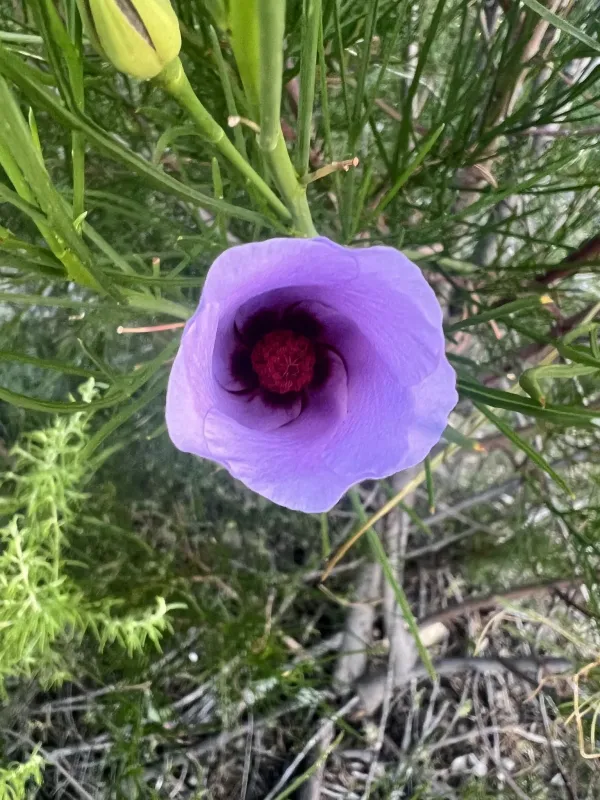
Description
Sowing dates
Propagation of Alyogyne hakeifolia is primarily achieved through seeds or semi-hardwood cuttings grown in controlled greenhouse environments. Seeds should be sown in a light, well-draining substrate while maintaining temperatures between 20–22 degrees Celsius.
When sowing, avoid burying seeds too deep; a light covering of sand or vermiculite is sufficient. Seedlings typically emerge within two to three weeks, provided that stable moisture levels are maintained throughout the germination period.
Cuttings are best taken in late spring using semi-hardwood stems approximately 10 centimeters in length. For optimal rooting success, using growth hormones and bottom heat in the propagation tray is highly recommended.
Pricking out the seedlings should be done carefully after the first pair of true leaves appears, taking care not to disturb the sensitive root system. Young plants require a gradual hardening-off process before being transplanted outdoors.
The ideal time for transplanting into open ground is after all frost risks have passed, as this species is highly sensitive to cold temperatures during its early growth stages.
Growing requirements
Alyogyne hakeifolia belongs to the Malvaceae family and originates from the arid regions of Western Australia. It is evolutionarily adapted to intense solar radiation and prolonged periods of drought.
For successful cultivation, the plant requires loose, sandy, or loamy soil with excellent drainage properties. Stagnant moisture near the roots is detrimental and often leads to the development of fungal infections.
The culture thrives in open, sunny locations protected from strong winds, as shading leads to leggy growth and a significant reduction in the intensity of flowering during the season.
The plant requires a warm climate and generally does not tolerate freezing temperatures. In regions with harsh winters, it should be grown as a container plant and moved to a greenhouse or conservatory.
Watering should be measured and controlled; the substrate must be allowed to dry out between waterings, effectively mimicking the natural ecological conditions of the Australian bush environment.
Main diseases and pests
Root rot represents the primary threat to Alyogyne hakeifolia, usually resulting from excessive soil moisture or poor drainage. Effective prevention relies on strict water management and ensuring a porous soil structure.
Spider mites are common pests that thrive in hot and dry environments. It is essential to monitor the undersides of the leaves regularly for signs of webbing and damage to implement timely control measures.
Aphids can attack tender shoots and flower buds, extracting nutrients and weakening the plant. If an infestation occurs, treating with appropriate insecticidal soap or systemic insecticides is advised.
Powdery mildew may develop if the plant is kept in conditions with poor air circulation and high relative humidity. Ensuring adequate spacing and airflow is critical to preventing fungal outbreaks.
Root-knot nematodes can cause severe issues when grown in open soil without proper crop rotation. Using sterile potting mixes for early-stage development is key to avoiding these soil-borne pathogens.