
Torenia fournieri hybrid
Torenia fournieri Linden ex E. Fourn. x T. concolor Lindl.
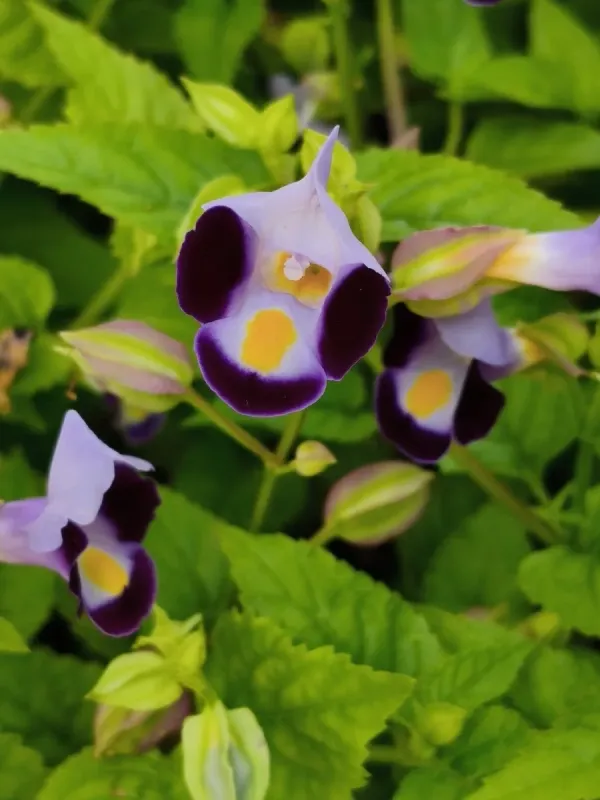
Description
Sowing dates
Torenia fournieri hybrid seeds are highly viable but require careful handling due to their microscopic size. The optimal time for starting seedlings is February or early March, as the plant grows slowly until the flowering stage.
Use a light, nutrient-rich substrate with a neutral pH for sowing. Distribute seeds evenly over the surface of the moist soil without covering them, as they require light to germinate effectively.
Cover the containers with plastic or glass to maintain consistent humidity. It is crucial to ventilate the seedlings daily to prevent condensation buildup and the growth of mold or fungus.
Maintain temperatures between 22–24 degrees Celsius during the germination period. Given these conditions, the first sprouts typically emerge within 10 to 14 days after sowing.
Prick out the seedlings once they develop two true leaves. During this phase, ensure the soil remains moist but avoid waterlogging, which can lead to damping-off disease.
Growing requirements
Torenia fournieri belongs to the Linderniaceae family and is grown as an annual crop in temperate climates. Its origin lies in the tropical regions of Asia and Africa, which dictates its preference for specific environments.
The plant thrives in well-lit locations but is sensitive to direct midday sun, which may cause leaf scorch. The best planting environment is partial shade or areas with filtered, soft lighting.
Torenia has high soil requirements; it needs fertile, well-draining, and loose soil. Excessive water retention at the roots will stunt growth and potentially cause plant death.
For vigorous growth and abundant flowering, regular fertilization with complex mineral fertilizers is essential. Applications should start two weeks after transplanting and continue throughout the growing season.
The culture is highly sensitive to cold weather and frost. Transplanting into open ground should only occur after the risk of late spring frosts has passed and the soil has sufficiently warmed up.
Main diseases and pests
Root rot is the most common threat to Torenia in high-humidity conditions. The disease spreads rapidly in dense plantings with poor air circulation, so proper spacing is vital for plant health.
Powdery mildew often infects the foliage when there are sharp fluctuations in air humidity. Manage this fungal infection with systemic fungicides and ensure adequate spacing to improve airflow.
Aphids are frequent pests that feed on the sap of young shoots and buds. Their infestation can lead to leaf deformation and the premature dropping of flower buds if left untreated.
Spider mites may attack Torenia during hot and dry weather conditions. To prevent infestations, it is recommended to mist the foliage regularly in the evening hours to increase local humidity.
Whiteflies can also cause significant damage to hybrid varieties. Use systemic insecticides to manage these pest populations, alternating products to prevent resistance buildup.