
Torenia fournieri
Torenia fournieri Linden ex E. Fourn.
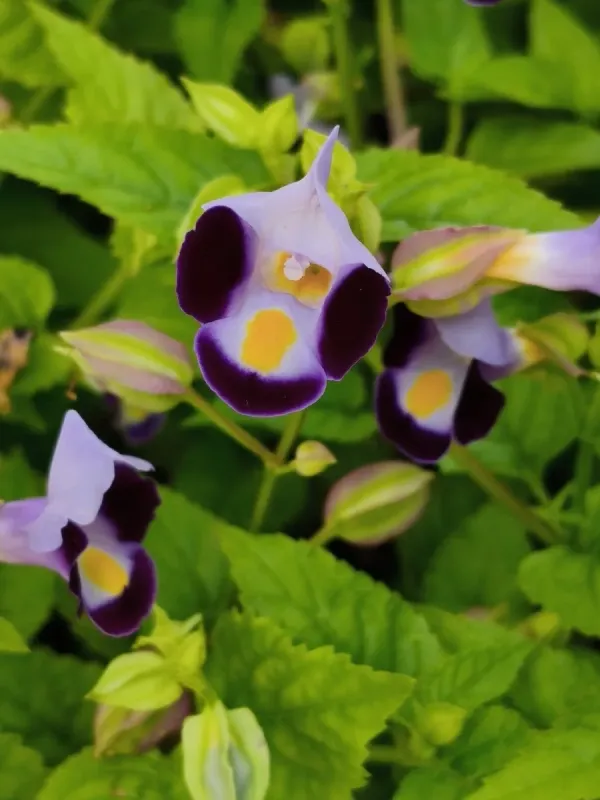
Description
Sowing dates
Sowing Torenia fournieri seeds for seedlings should be performed in early spring, usually between March and April. Since the seeds are minute, they should be surface-sown onto a moist, sterile seed-starting mix without being buried under the soil.
The germination process requires constant warmth, ideally between +22 °C and +25 °C. Covering the trays with plastic wrap or a clear lid helps maintain the necessary humidity levels for successful sprouting.
Once the seedlings emerge, they should be placed in a bright location but shielded from direct, intense sunlight. Maintaining good air circulation is crucial at this stage to prevent damping-off disease.
Transplanting (pricking out) the young plants into individual pots or cell trays should occur once they develop two or three sets of true leaves. This promotes robust root development before the final move outdoors.
The hardening-off period is essential before planting Torenia outdoors. It should only be transplanted once all danger of frost has passed and the soil temperatures have consistently warmed up.
Growing requirements
Torenia fournieri, commonly known as the wishbone flower, belongs to the Linderniaceae family (formerly Scrophulariaceae). It is a tropical annual that thrives in warm, humid climates with partial shade.
The plant demands rich, well-draining soil that is high in organic matter. While it loves moisture, it cannot tolerate waterlogged conditions, which can quickly lead to root rot in the dense root systems.
Consistent moisture is the key to healthy Torenia growth. The soil should never be allowed to dry out completely, as even brief periods of drought will result in wilting and the dropping of flower buds.
Torenia prefers temperatures between +20 °C and +25 °C. It is highly sensitive to cold weather, and growth will cease if the ambient temperature drops significantly, making it unsuitable for early spring outdoor exposure.
Regular fertilization with a balanced liquid fertilizer every two weeks during the growing season will ensure sustained blooming. Using a bloom-booster formulation can further enhance the color and quantity of flowers.
Main diseases and pests
Powdery mildew is a significant threat, especially in stagnant air conditions or high humidity. It appears as a white, dusty layer on leaves and stems, eventually weakening the entire plant structure.
Root and stem rot caused by various soil-borne pathogens are common issues if the plant is overwatered or kept in heavy, poorly draining soil. Proper soil management is the primary preventative measure.
Aphids and whiteflies are the most frequent insect pests. These pests congregate on the underside of leaves, sucking sap and causing yellowing, stunted growth, and the transmission of secondary viral infections.
Spider mites can become a problem if the environment becomes too dry. Keeping the humidity levels stable and providing adequate water helps to keep these pests at bay during the heat of summer.
Cultural hygiene is vital: promptly remove any debris from around the base of the plant and ensure that the foliage remains dry during irrigation to minimize the development of opportunistic fungal diseases.