
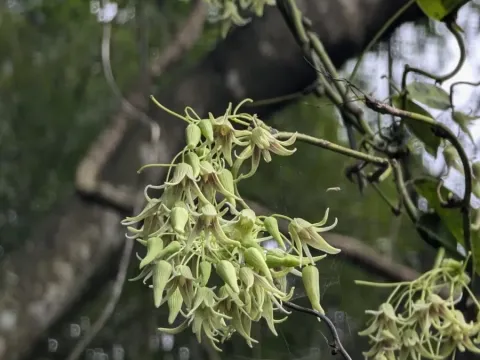
Stauntonia
Stauntonia
Propagation of Stauntonia is most commonly achieved through seeds, which should be sown fresh to ensure the highest possible germination rates.
What the section contains


Stauntonia
Seed stratification is highly recommended; keeping seeds in a cool environment for several weeks mimics winter conditions and triggers the germination process.
Vegetative propagation via cuttings is preferred by gardeners wanting to ensure the plant maintains the specific traits of the parent vine.
Cuttings should be taken from semi-ripe wood during the active growth season and rooted in a well-draining, moist potting medium under cover.
Young plants require careful attention to humidity levels and protection from harsh direct sunlight until they have established a strong root system.
Stauntonia belongs to the Lardizabalaceae family and is a vigorous evergreen climber native to the temperate and subtropical forests of East Asia.
This species thrives in partial shade, as exposure to intense, direct afternoon sun can lead to leaf scorch and dehydration during the summer.
Soil requirements include a rich, fertile loam that is slightly acidic to neutral and equipped with excellent drainage to prevent waterlogging.
The plant requires moderate, consistent moisture; however, it is essential to ensure that the soil does not become overly saturated to avoid root rot.
As a climbing vine, Stauntonia needs robust support structures such as trellises, fences, or pergolas to reach its full development potential.
Stauntonia is appreciated for its unique, edible fruits which are elongated and possess a sweet, tropical-like flavor profile when fully ripe.
Yields are typically dictated by pollination efficiency, meaning that having multiple plants or favorable conditions for insects is crucial for fruit set.
The flowering period occurs in spring, and the subsequent development of fruit takes several months, reaching maturity in the late summer or autumn.
Plants generally enter a productive phase after 3 to 5 years, provided they are placed in a suitable microclimate with sufficient nutrient availability.
Though not a standard agricultural crop, its fruit is highly sought after by home gardeners and culinary enthusiasts for its exotic appeal.
The primary pests affecting Stauntonia include aphids and spider mites, which are particularly problematic in dry and poorly ventilated growing conditions.
Fungal infections, such as leaf spot diseases, can occur when foliage remains wet for extended periods or when airflow is insufficient within the dense canopy.
Proper sanitation, including the removal of dead or decaying plant matter, is vital to maintaining the health and vigor of the vine.
Integrated pest management strategies, utilizing both natural predators and eco-friendly sprays, are recommended for maintaining plant health.
Regular pruning helps to keep the vine manageable and improves air circulation, which is a key factor in reducing the incidence of disease.
Harvesting should occur when the fruits exhibit a color change and feel slightly soft to the touch, indicating peak sweetness and flavor.
Use a sharp pair of pruning shears to detach the fruits from the stem to avoid unnecessary stress or damage to the plant's structural integrity.
Due to the short shelf life of the fruits, it is best to harvest them as they are needed for consumption rather than storing them for long durations.
Care should be taken during the harvest process to prevent bruising, as the skin of the fruit is delicate and sensitive to pressure.
Proper harvest planning involves monitoring the plant closely as autumn approaches to catch the fruit at the precise moment of maximum ripeness.