
Decaisnea fargesii
Decaisnea fargesii
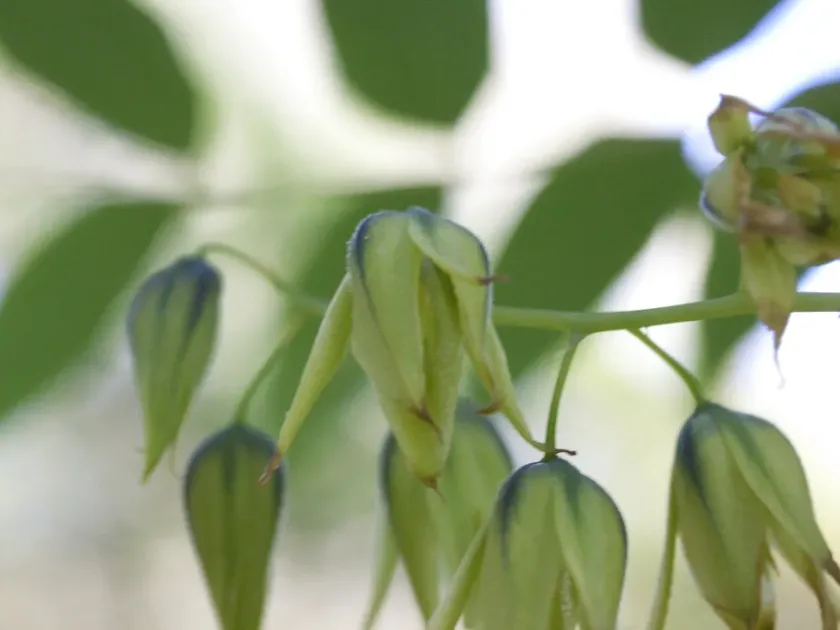
Description
Sowing dates
Propagation of Decaisnea fargesii is primarily achieved through seed germination, which requires a pre-sowing cold stratification process to break dormancy.
Seeds should be kept in moist sand at temperatures around 4-5 degrees Celsius for approximately three months before they are ready for planting.
Sowing is typically done in the spring in a well-draining, nutrient-rich substrate, keeping the soil consistently moist but never waterlogged.
Seedlings exhibit slow initial growth and require protection from harsh environmental factors, such as direct midday sun and strong winds, during their first two years.
For those looking for faster development, cuttings from semi-hardwood taken in summer may be used, though rooting success depends heavily on humidity and hormone treatment.
Growing requirements
Decaisnea fargesii belongs to the Lardizabalaceae family and is native to the temperate mountain forests of Western China and the Himalayas.
The shrub thrives in deep, fertile, and humus-rich soils that maintain a neutral to slightly acidic pH level and provide excellent drainage.
It prefers a location that offers partial shade, mimicking its natural woodland habitat, which prevents the foliage from scorching under intense sunlight.
While the plant is hardy enough to survive freezing temperatures, it benefits significantly from a sheltered location to protect it from cold, drying winter winds.
Regular irrigation is essential, especially during the peak growing season, as the plant's shallow root system is highly sensitive to extended drought conditions.
Yield
The main agricultural product of this species is its unique, pod-like fruits, often referred to as "blue sausage fruits" or "dead man's fingers."
The inner flesh is a translucent, gelatinous mass containing numerous black seeds, which offers a mild, sweet, watermelon-like flavor profile.
Plants grown from seeds usually start producing fruit after 5 to 7 years, assuming the growth conditions are optimal and pollination is successful.
The yield potential is generally low compared to conventional orchard crops, making Decaisnea an ideal choice for specialty nurseries and hobbyist agriculture.
Due to the delicate nature of the pulp and the thin skin, the fruit does not lend itself well to large-scale shipping, limiting its commercial market reach.
Main diseases and pests
Decaisnea fargesii is generally robust, but it can be susceptible to fungal issues if the soil drainage is poor or if airflow around the canopy is restricted.
Root rot is the most significant threat, often resulting from stagnant water accumulating around the crown, which necessitates careful site selection and soil amendment.
Insects like aphids or scale may occasionally appear, especially when the plant is kept under stressed conditions in containers or poorly ventilated greenhouses.
Maintaining a clean growing environment by removing dead foliage and weeds helps reduce the risk of secondary infections and pest infestations.
If chemical intervention becomes necessary, light application of organic-certified pesticides or fungicides should be applied only during the early stages of infestation.
Harvesting
The harvest season for Decaisnea fargesii begins in mid-to-late autumn when the fruit skin turns from green to a distinct metallic blue-gray color.
Maturity is reached when the fruit becomes slightly soft to the touch, indicating that the inner gelatinous flesh has reached its peak sugar content.
Harvesting should be done manually with shears, taking great care to avoid bruising the soft skin, which quickly oxidizes and degrades after physical injury.
Because the fruits can split when overripe, daily monitoring during the harvest window is recommended to ensure all fruits are picked at the optimal time.
Once harvested, the fruit should be cooled immediately and stored in a cool, shaded area to extend its shelf life, though it should ideally be consumed within a few days.