
Stauntonia hexaphylla
Stauntonia hexaphylla
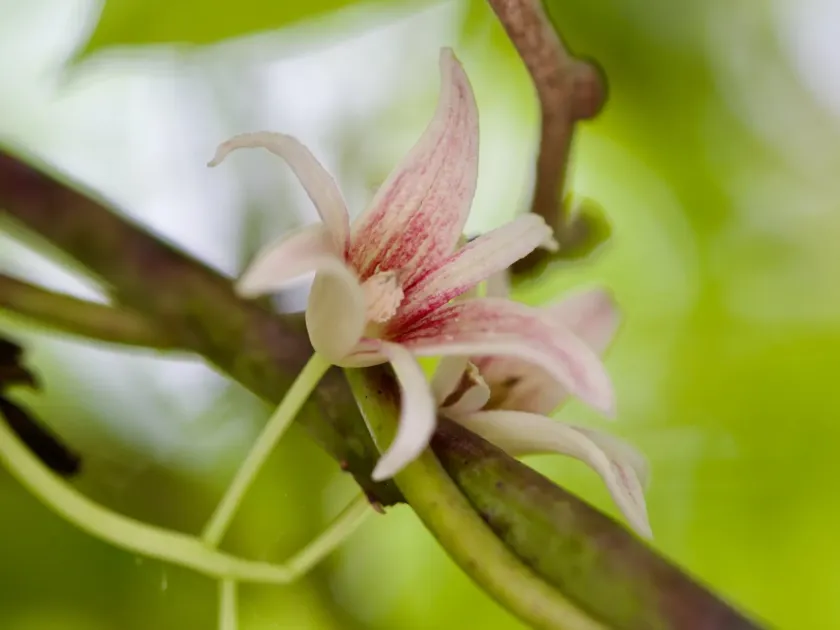
Description
Growing requirements
Stauntonia hexaphylla, commonly known as the chocolate vine or simply stauntonia, is an evergreen woody climber in the Lardizabalaceae family. It is native to the temperate regions of Japan, Korea, and China, thriving in moist and sheltered environments.
The plant requires a well-drained, fertile soil that remains consistently moist but not waterlogged. A neutral to slightly acidic pH is ideal for promoting healthy foliage and vigorous vine development.
Regarding climate, this species prefers mild subtropical conditions. While it has some hardiness, it needs protection from heavy frosts and cold, drying winds, especially when the plant is young or during exceptionally cold winters.
Cultural requirements include providing a sturdy trellis or support system, as the vine can grow quite rapidly. Partial shade to full sun exposure is suitable, provided the soil moisture is maintained, particularly during the peak summer heat.
Beyond its ornamental appeal, the plant produces edible fruits with a unique, tropical flavor. The vine is an excellent choice for vertical gardens, privacy screens, and creating natural shade in residential landscapes.
Main diseases and pests
Stauntonia hexaphylla is remarkably resistant to major agricultural diseases. Its hardy nature makes it an excellent choice for low-maintenance garden projects where minimal chemical intervention is desired.
Potential threats include powdery mildew, which can occur if air circulation is poor within the foliage. Maintaining an open structure through pruning significantly reduces the risk of this fungal disease.
Insect pests like aphids or spider mites are rarely a problem but may appear in greenhouse environments or during extreme drought stress. Consistent irrigation and checking the undersides of leaves are effective prevention strategies.
Soil-borne pathogens are generally not a concern unless the site suffers from persistent waterlogging. Ensuring high-quality drainage before planting is the most important step in protecting the root system.
Integrated pest management, when necessary, should focus on biological control agents. The plant’s inherent vigor usually allows it to recover quickly from minor pest pressure without the need for systemic insecticides.