
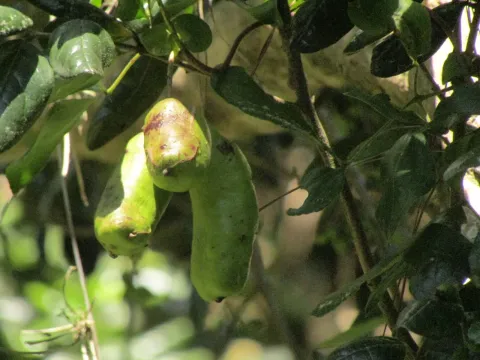
Lardizabala
Lardizabala
Lardizabala (Lardizabala biternata) is a monotypic genus of evergreen woody climbers belonging to the Lardizabalaceae family. Native to the forests of Chile, this plant thrives in humid, protected environments away from harsh, drying winds.
What the section contains

Lardizabala
In cultivation, this vine requires a mild climate, as it has limited frost tolerance and struggles with drastic temperature fluctuations. The ideal planting site offers plenty of light while keeping the root zone cool and shaded, mimicking its forest floor origins.
The soil must be fertile, loose, and well-drained, with a neutral to slightly acidic pH level. Consistently moderate moisture is crucial, as the plant is highly sensitive to prolonged drought, which can cause leaf drop and stunted growth.
Sturdy support structures are essential for its growth, as the vine grows vigorously and requires ample space to spread. Trellises, pergolas, or tree trunks serve as excellent supports for the plant's twining stems.
For gardeners in colder regions, Lardizabala is best grown in containers. During the winter, plants should be moved to a sheltered, frost-free location to protect their evergreen foliage and ensure survival for the next growing season.
Lardizabala is cultivated primarily for its edible fruit, often referred to as "cazú" in its native Chile. These elongated, berry-like fruits contain a sweet, aromatic pulp that is highly prized by those who enjoy exotic, tropical-like flavors.
As the plant is dioecious, gardeners must plant both male and female specimens close to each other to facilitate cross-pollination and ensure a successful fruit set. Without the presence of both sexes, the plant will remain purely ornamental.
Fruit production depends on the maturity of the vine and the quality of the light it receives. Regular pruning to thin out the canopy and remove old, non-productive stems can significantly increase the quantity and quality of the harvest.
Harvesting typically occurs in the late season when the fruit is fully mature. Being proactive in harvesting prevents damage from birds or early frosts that can affect the delicate flesh of the berries.
Beyond its culinary uses, the stems of Lardizabala are noted for their remarkable strength and flexibility, and they have been historically used in traditional weaving and basket-making crafts.
The primary threats to Lardizabala are fungal infections, which often stem from poor air circulation or waterlogged soil. Maintaining a clean environment and proper drainage is the most effective way to prevent root rot.
Common pests include scale insects and spider mites, particularly when the plant is kept in greenhouse or indoor conditions with low air humidity. Regular monitoring is essential to keep these populations in check.
While generally hardy against standard garden pests, the plant requires consistent attention to soil quality to avoid nematode infestations that can impact the root system in certain climatic zones.
Preventive maintenance includes annual spring cleaning to remove dead wood and applying organic mulch to protect the roots, which also helps in moisture retention and soil temperature regulation.
If chemical intervention becomes necessary due to pest outbreaks, it is advised to use organic or biological control methods, especially if the vine is being grown for its edible fruit production.