
Whorled mountain mint
Pycnanthemum verticillatum
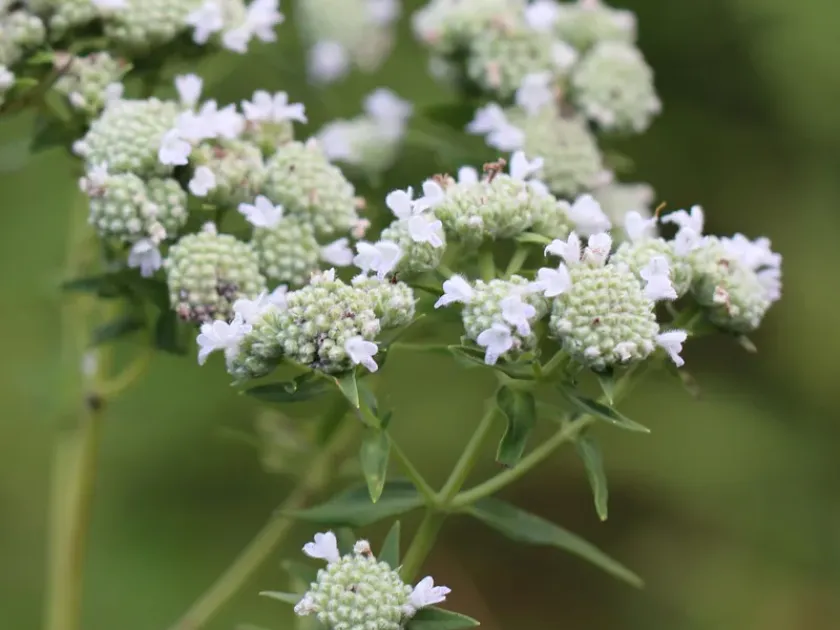
Description
Sowing dates
Sowing Pycnanthemum verticillatum is best performed in early spring as soon as the soil warms up to 10–12°C. In temperate climates, seeds can be sown directly into the soil or started in trays to produce robust seedlings before the growing season begins.
The seeds of this species show high germination energy when kept adequately moist, though they benefit from cold stratification if stored for extended periods. Seeds should be planted at a shallow depth of 0.5–1 cm, as they are very small and sensitive to soil crusting.
An optimal planting scheme for commercial fields involves row spacing of 45–60 cm. This provides sufficient space for each bush and allows for mechanical weeding and maintenance during the active growth period.
Vegetative propagation via root division is best performed in late summer or early autumn. This allows the plant to establish itself in a new location before the first hard frosts, which is crucial for overwintering success.
Preparing the growing medium is essential: it must be loose, well-draining, and free of perennial weeds that could outcompete the young mountain mint seedlings during their early developmental stages.
Growing requirements
Whorled mountain mint belongs to the Lamiaceae family and is native to North American habitats. The plant prefers full sun exposure, although it can tolerate partial shade without significant loss of aromatic potency.
The crop has moderate soil requirements, thriving best in fertile, well-drained loamy soils with a neutral or slightly acidic pH. Waterlogged conditions must be avoided as they are detrimental to the root system.
Climate requirements include sufficient rainfall during the spring and summer. The plant possesses good cold hardiness and can withstand significant temperature drops, making it suitable for cultivation across various climatic zones.
During the growing season, maintaining optimal soil moisture is critical, especially when the plant is forming its foliage. Regular weeding and mulching help conserve soil moisture and prevent fungal pathogens near the base of the plant.
Mineral nutrition should be balanced. Nitrogen fertilizers should only be applied during the first half of the vegetative cycle, as excess nitrogen late in the season can reduce the concentration of essential oils in the leaves and flowers.
Yield
The economic use of this crop is primarily focused on the production of high-value essential oil rich in pulegone and menthol. The yield of green biomass depends on the management practices and the age of the plantation.
Whorled mountain mint is highly valued as a potent honey plant, attracting numerous pollinators to the fields. This makes it a great candidate for companion planting with other agricultural crops that depend on insect pollination.
Botanical features include erect stems with whorled leaves, providing the plant with an attractive ornamental appearance. Both the leaves and flower clusters possess a strong, minty fragrance that remains potent even after the biomass is dried.
In the pharmaceutical industry, raw materials from mountain mint are used to create antiseptic and anti-inflammatory formulations. The plant is also commonly used in traditional herbal medicine for teas and infusions that aid digestion.
Economic efficiency is further enhanced by the crop's utility in landscaping, where it is prized for its long blooming period and low-maintenance nature compared to other commercial herbs.
Main diseases and pests
Common diseases of mountain mint include root rots, which often occur due to improper irrigation or poor soil drainage. Prevention focuses on crop rotation and soil moisture management.
Powdery mildew can affect the foliage during periods of high humidity and heat. Managing this disease involves thinning the planting density and using appropriate fungicidal treatments in the early stages of infection.
The most significant pests include aphids and spider mites, which feed on young leaves and reduce the market quality of the harvested material. Weekly monitoring of pest populations is recommended.
Occasionally, plantations may suffer from slugs and snails that damage the base of young plants. Setting traps and keeping the area around the plants clean help to minimize damage from these pests.
Overall crop protection is based on integrated pest management (IPM) practices, combining biological control methods and timely agrotechnical care, ensuring the final harvest is free from chemical residues.
Harvesting
Harvesting is best carried out during the peak flowering phase, when the concentration of essential oils in the above-ground plant parts is at its maximum. At this time, the raw material possesses the best organoleptic properties.
Cutting the stems should be performed in dry weather, preferably in the morning after the dew has evaporated. This prevents the raw material from spoiling and ensures a rapid and high-quality drying process.
For essential oil production, the harvested biomass should be transported to the processing facility as quickly as possible to prevent the oxidation and evaporation of volatile compounds. Short-term wilting in the shade is sometimes permitted.
Drying the material for medicinal purposes should be done in a well-ventilated area at temperatures not exceeding 35–40°C. This temperature range preserves the maximum amount of bioactive compounds.
Once dry, the material is threshed to separate leaves and flowers from the coarse stems. The resulting fraction is packaged in airtight containers to prevent aroma loss and protect the product from direct sunlight during storage.