
Westringia dampieri
Westringia dampieri R. Br.
Description
Growing requirements
Westringia dampieri is an evergreen shrub belonging to the Lamiaceae family. Native to Western Australia, it is highly valued for its coastal hardiness and its ability to thrive in harsh, exposed environments.
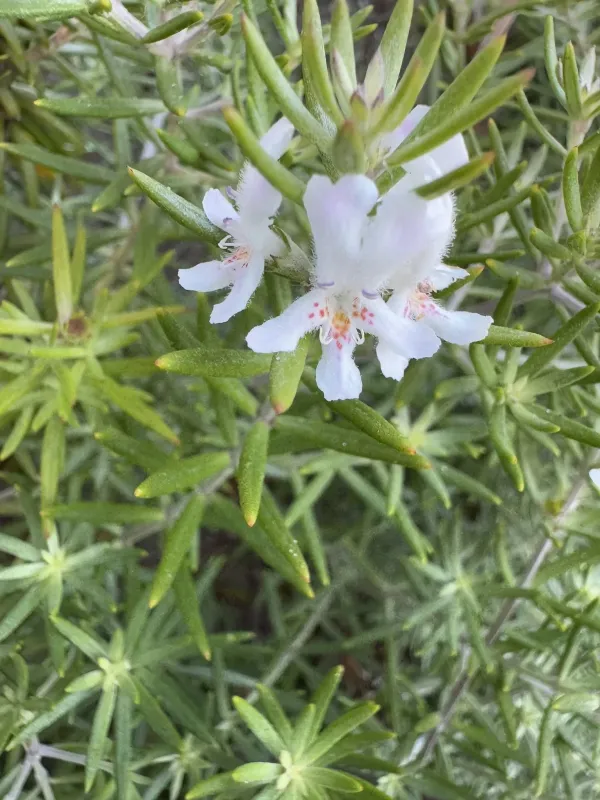
The plant is characterized by its linear, gray-green leaves covered in fine hairs, giving it a soft, aesthetic appeal. It produces small, white to pale lilac flowers that bloom throughout the warmer months, resembling the appearance of rosemary.
Successful cultivation requires well-drained, sandy, or loamy soil. Drainage is the single most important factor for this species, as stagnant water will inevitably lead to root rot and plant death.
Westringia dampieri thrives in full sun, which is essential for maintaining a compact, dense habit. While it is tolerant of coastal winds and salt spray, it requires protection from severe, prolonged frosts in non-native climates.
Its primary use is in landscaping as a hedging plant, windbreak, or as a structural element in low-maintenance, water-wise gardens. It responds very well to regular trimming, which helps keep the foliage thick.
Main diseases and pests
Root rot, caused by Phytophthora or similar fungal pathogens, represents the primary threat to the health of Westringia dampieri. It is almost always a result of poor soil aeration or over-watering.
Pests such as scale insects and mealybugs can occasionally infest the branches, especially in sheltered or overcrowded planting sites. Manual removal or horticultural oils are typically effective for management.
Nutrient deficiency, specifically phosphorus sensitivity, is a common issue for many Australian natives. Using generic fertilizers can lead to foliage yellowing and reduced vigor, requiring specialized nutrient management.
Fungal leaf spot can occur during extended periods of high humidity or poor air circulation. Thinning out the branches through selective pruning is a simple but effective cultural practice to reduce this risk.
Environmental stress, such as sudden shifts in temperature or prolonged waterlogging, weakens the plant's natural defenses, making it more susceptible to secondary infestations of spider mites or aphids.