
Siberian motherwort
Leonurus sibiricus L.
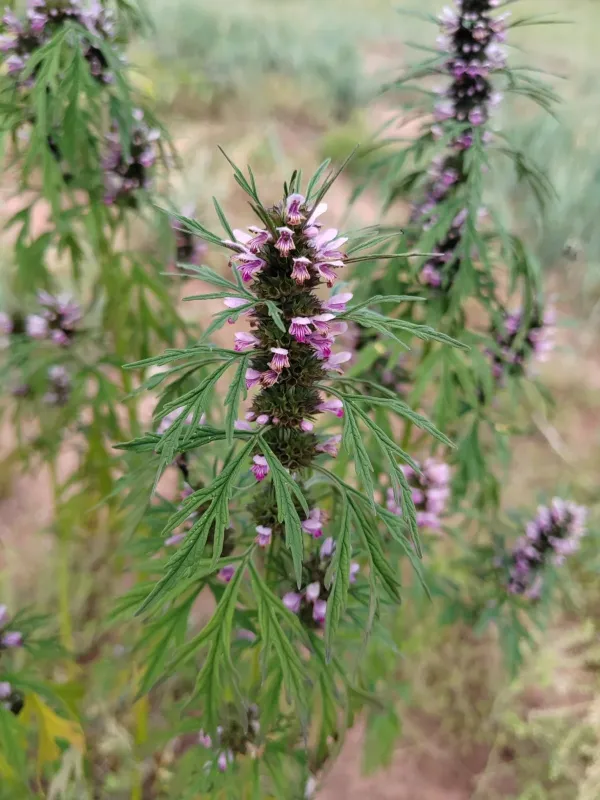
Description
Sowing dates
Sowing of Siberian motherwort is primarily carried out in the spring, once the soil warms up to 10-12 degrees Celsius. Depending on the region, the optimal period is late April to mid-May.
Late autumn sowing is also possible, which allows for earlier and more uniform emergence in the following season. During this process, seeds undergo natural stratification in the soil.
The sowing depth is 1-2 centimeters. It is essential to ensure good seed-to-soil contact to facilitate successful germination.
Row spacing in commercial fields is usually set at 45-60 centimeters. This distance facilitates maintenance tasks and mechanized harvesting operations.
The seeding rate is determined by seed viability and planting method, typically averaging 3-5 kilograms per hectare.
Growing requirements
Siberian motherwort belongs to the Lamiaceae family and is an annual or biennial herbaceous plant.
The crop prefers open, well-lit areas. While it is quite drought-tolerant, it requires sufficient moisture during the initial growth phase to produce a high vegetative mass.
The plant has moderate soil requirements but thrives best in fertile, light-textured loams or chernozem soils with a neutral pH level.
The plant does not tolerate waterlogging or marshy areas. Proper drainage is a critical requirement to prevent root rot diseases.
Its natural habitat includes Siberia, the Far East, China, and Mongolia, which reflects its adaptation to continental climatic conditions.
Main diseases and pests
The primary pests affecting motherwort are aphids, which damage young leaves and inflorescences by sucking plant sap.
Plantations are often susceptible to weevil attacks, which consume leaf margins. Protective measures include agro-technical practices and biological control methods.
Under conditions of high humidity and overcrowded planting, plants are prone to fungal diseases such as powdery mildew and grey mold.
Preventive care involves strict crop rotation, regular thinning of plantings, and timely weed control to ensure plant health.
If signs of pests or pathogens appear, it is necessary to apply approved agricultural products promptly to preserve the yield quality.
Harvesting
Harvesting of Siberian motherwort is conducted during the mass flowering phase, when the concentration of bioactive compounds is at its peak.
The raw material is gathered by mowing the stems at a height of 10-15 centimeters from the soil surface, allowing for potential regrowth.
Harvested material must be moved quickly to drying facilities to prevent self-heating and loss of quality in the plant material.
Drying is performed in shaded, well-ventilated areas or in specialized dryers at temperatures not exceeding 40-45 degrees Celsius.
Properly dried material should retain its natural color, characteristic aroma, and the structural integrity of leaves and flowers.