
Narrow-leaf mountain mint
Pycnanthemum flexuosum
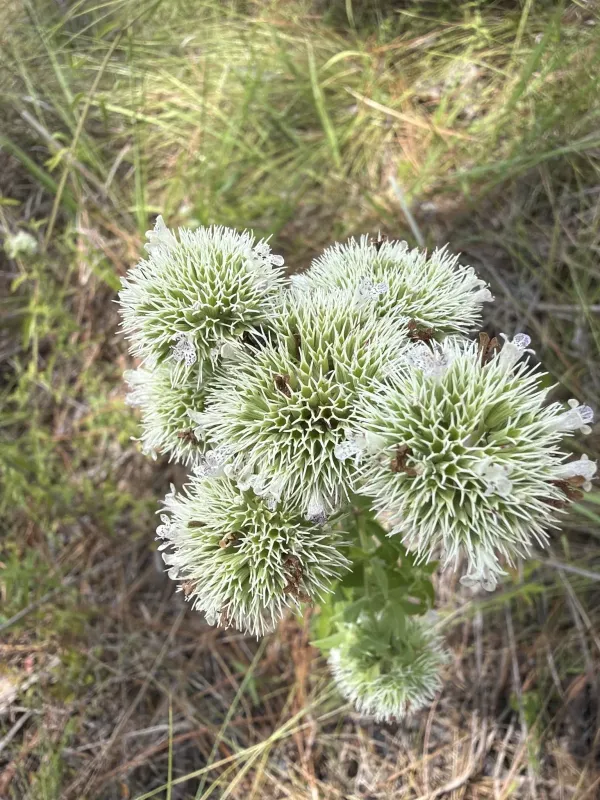
Description
Sowing dates
Narrow-leaf mountain mint is a perennial herb of the Lamiaceae family. Seeds require a period of cold stratification to break dormancy, making fall sowing or specialized spring pre-treatment essential for success.
The seeds are extremely small and should be sown on the surface of well-prepared, fine-textured soil, as they require light to initiate the germination process.
For commercial production, starting plants in greenhouses and transplanting them in late spring ensures better seedling survival and faster ground coverage.
Row spacing should be maintained at approximately 45 to 60 centimeters to allow for mechanical weeding and adequate light penetration to the base of the plants.
Careful attention must be paid to weed control during the seedling stage, as the plant grows relatively slowly and can be easily outcompeted by aggressive weeds.
Growing requirements
This species thrives in full sun, which is critical for maximizing the essential oil content and ensuring vigorous growth during the hot summer months.
It adapts to a variety of soil types but performs best in well-drained, sandy loams with a neutral pH, avoiding sites prone to waterlogging.
Although it possesses good drought tolerance once established, consistent soil moisture during the peak growing season significantly enhances biomass production.
The plant is hardy and well-adapted to temperate climates, showing good resistance to winter cold provided there is no excessive standing water on the site.
Fertilization with a balanced nutrient program during the early spring encourages robust foliage development and increases the potential yield for the season.
Yield
The economic value of this crop is primarily derived from its aromatic biomass, which is harvested for industrial distillation of essential oils.
Yields increase significantly after the first year as the root systems establish and the plants reach their full architectural potential in the second year.
By implementing proper irrigation and nutrition management, growers can expect multiple harvests during a single growing season in favorable climates.
Productivity is also linked to the harvest timing; crops collected at the peak of bloom provide the highest volume of concentrated aromatic compounds.
Ongoing maintenance, including the removal of deadwood and old stems, helps sustain high yields over the productive lifespan of the plantation.
Main diseases and pests
The strong aromatic nature of the foliage acts as a natural deterrent against many common insect pests, making it a reliable crop for organic growers.
However, environmental conditions that promote high humidity can lead to fungal issues such as powdery mildew, especially if plant density is too high.
Root rot remains a risk if the soil lacks sufficient drainage, emphasizing the importance of site selection and soil preparation before planting.
Integrated pest management strategies should focus on airflow and sanitation, such as removing debris after harvest to reduce pathogen overwintering.
Regular monitoring for signs of stress, such as yellowing leaves or stunted growth, allows for quick intervention before issues spread across the field.
Harvesting
The ideal harvest window is during the full bloom phase, as this is when the concentration of beneficial volatile oils is at its highest point.
Plants should be cut approximately 10 centimeters above the ground, a technique that prevents damage to the base and encourages healthy regrowth.
Immediate post-harvest processing is required, involving shade drying or mechanical dehydration at moderate temperatures to preserve oil quality.
Post-drying handling involves the separation of leaves and flower heads from the tougher stems to improve the purity of the distillation stock.
Storage of the finished product must be handled in airtight containers in a cool environment to maintain the potency and scent profile of the oils.