
Nardia scalaris
Nardia scalaris
Nardia scalaris is a leafy liverwort belonging to the family Jungermanniaceae. It is not an agricultural crop but functions as an essential soil-covering plant in temperate and sub-arctic ecosystems, playing a critical role in early-stage succession on mineral soils.
What the section contains
Nardia scalaris
The species is widespread throughout the Northern Hemisphere, inhabiting diverse environments including stream banks, forest tracks, and exposed rocky slopes. It acts as a pioneer species, colonizing raw mineral soil where nutrient levels are too low for vascular plants to survive.
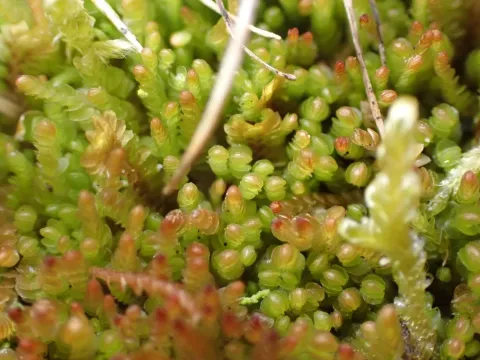
Botanically, it forms dense mats with prostrate shoots. The leaves are arranged in a characteristic overlapping pattern that resembles a ladder, which inspired its scientific name. These leaves often turn reddish-brown in high light conditions, serving as a protective mechanism against UV radiation.
To thrive, Nardia scalaris requires consistently moist environments and acidic soil conditions. It is highly intolerant of basic or alkaline substrates, making it an excellent ecological indicator for acidic, nutrient-poor landscapes in both lowland and mountainous regions.
Its primary ecological function is the prevention of soil erosion. By stabilizing loose substrate with its dense, mat-like growth, the liverwort reduces the impact of water runoff on slopes, creating a stable environment that can eventually be colonized by larger plant species.
The species does not suffer from traditional agricultural pests or crop diseases. However, its survival is threatened by habitat loss due to land drainage, urbanization, and the significant compaction of soil caused by heavy machinery in forestry operations.
Drought represents a major threat to this liverwort. As it lacks deep roots and moisture-storing vascular tissues, the species is highly vulnerable to drying out during prolonged dry seasons, which can result in the rapid desiccation and death of large colonies.
Eutrophication of the soil is another significant threat. The application of chemical fertilizers in nearby areas can alter the acidity and nutrient balance of the soil, allowing fast-growing weeds to outcompete the Nardia mats for space and light.
Air pollution, particularly acid rain, poses a significant risk to the health of the populations. Because bryophytes absorb nutrients and water directly through their leaves, they are extremely sensitive to chemicals and heavy metals present in the precipitation.
Physical disturbance is also a limiting factor for this species. Trampling by livestock or heavy human traffic in recreational areas can destroy the fragile mat structure. Recovery from such damage is slow, as the species relies on stable conditions to spread its protonema across the substrate.