
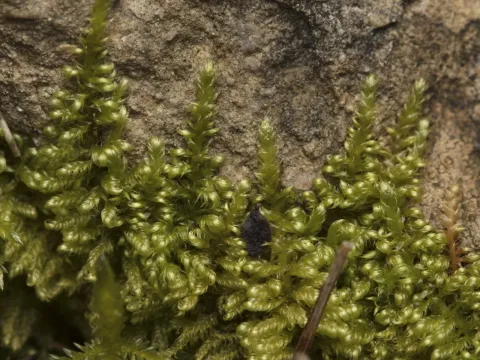
Ctenidium molluscum
Ctenidium molluscum
Ctenidium molluscum, a member of the Hypnaceae family, is a distinct species of moss known for its feather-like, pinnate branching. It forms dense, yellowish-green mats that provide significant aesthetic value to shaded environments.
What the section contains
Ctenidium molluscum
The native range of this moss spans across the temperate regions of the Northern Hemisphere. It is typically found in habitats rich in calcium, such as limestone cliffs, rocky crevices, and moist, nutrient-rich forest floors.
The cultivation of this moss requires specific environmental parameters, primarily high humidity and consistent moisture. It thrives in semi-shaded areas where it can avoid direct, harsh sunlight that would otherwise desiccate its delicate structure.
Soil requirements are critical, as Ctenidium molluscum prefers alkaline or neutral substrates. Its ability to colonize these surfaces depends on the availability of essential minerals, particularly calcium, which supports the structural integrity of the gametophyte.
In terms of practical application, it is used in ornamental gardening for terrariums, rock gardens, and specialized shade displays. Its ability to create a carpet-like effect makes it a sought-after species for unique landscape projects.
The primary threat to the stability of a Ctenidium molluscum colony is air pollution, particularly sulfur compounds that lead to soil acidification. This shift in pH can cause the moss to decline rapidly.
Fungal pathogens represent a significant risk, especially in conditions where poor drainage leads to stagnant water. Proper airflow is essential to prevent the spread of rot within the dense moss mats.
Invertebrate pests, including certain mites and nematodes, may feed on the rhizoids or stems of the moss if the plants are already stressed by improper temperature or moisture levels.
Competition from vascular plants is a natural pressure. If faster-growing herbaceous species colonize the same area, they may shade out the moss, leading to a loss of the original vegetation patch.
Mechanical damage from physical trampling or debris accumulation poses a long-term threat. As a slow-growing bryophyte, it struggles to recover from significant physical disturbance in a timely manner.