
European frog-bit
Hydrocharis morsus-ranae
Description
Growing requirements
European frog-bit (Hydrocharis morsus-ranae) belongs to the Hydrocharitaceae family. It is a perennial free-floating aquatic plant native to Europe and parts of Asia. It thrives in stagnant or slow-moving water bodies, such as ponds, ditches, and shallow areas of lakes.
The plant requires well-lit, calm water environments with nutrient-rich organic sediment. It typically occupies depths ranging from 20 to 50 cm. Its growth is highly dependent on water temperatures, with optimal development occurring during warm summer months when the water column is well-warmed.
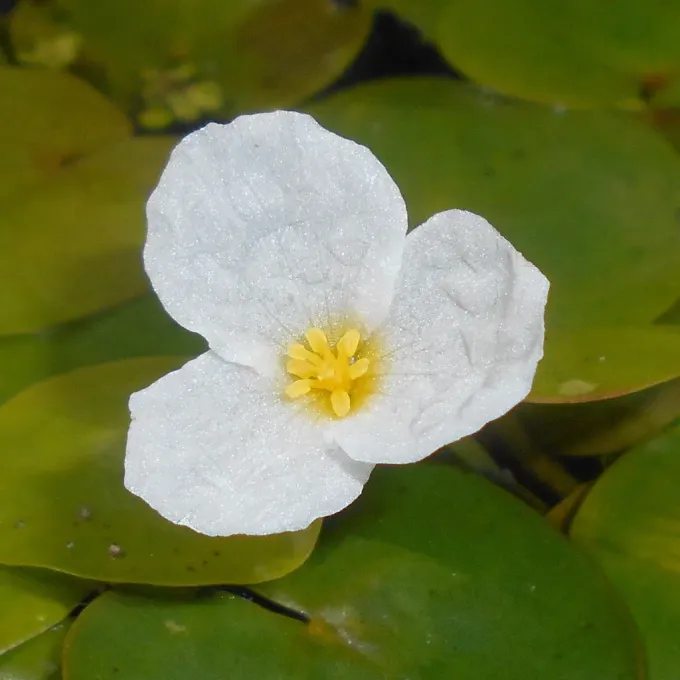
Botanically, it features a rosette of heart-shaped leaves that float on the water surface. These leaves are thick and leathery, providing buoyancy. During the flowering period, the plant produces distinctive white flowers with three petals, which are a signature characteristic of this species.
In terms of aquatic management, the species is known for its rapid vegetative spread. Using horizontal stolons, it can quickly colonize large areas of a pond. Therefore, regular monitoring and manual removal of excess plant material are necessary to prevent total surface coverage and potential oxygen depletion.
The plant exhibits a clever survival strategy through the formation of turions — specialized overwintering buds. These buds sink to the bottom of the water body to endure winter temperatures, rising back to the surface in the spring to begin a new growth cycle when the water warms up.
Main diseases and pests
European frog-bit is generally resilient, but it can be susceptible to fungal infections if water circulation is poor. Symptoms often include the browning of leaf edges and a slimy texture, indicating that the plant is struggling with excess organic decay in the water.
Pests such as certain species of aquatic snails and insect larvae are known to graze on the leaves. While minor damage is usually tolerated, heavy infestations can lead to significant loss of leaf surface, hindering the plant's ability to photosynthesize effectively.
Pollution from agricultural runoff, particularly nitrates and phosphates, can cause excessive algal blooms. These algae compete with the frog-bit for space and nutrients, often suffocating the plant by creating dense mats that prevent light penetration.
Heavy metal contamination in the water is another major threat. As a bioaccumulator, the plant readily absorbs toxins, which can lead to rapid chlorosis and subsequent death of the colony if the water quality is severely compromised.
Mechanical disturbance from large fish or waterfowl activity can tear the delicate stolons and leaves. This physical stress often results in localized die-offs, making the plants more vulnerable to colonization by opportunistic water-borne pathogens.