
Smooth frogbit
Hydrocharis laevigata
Description
Growing requirements
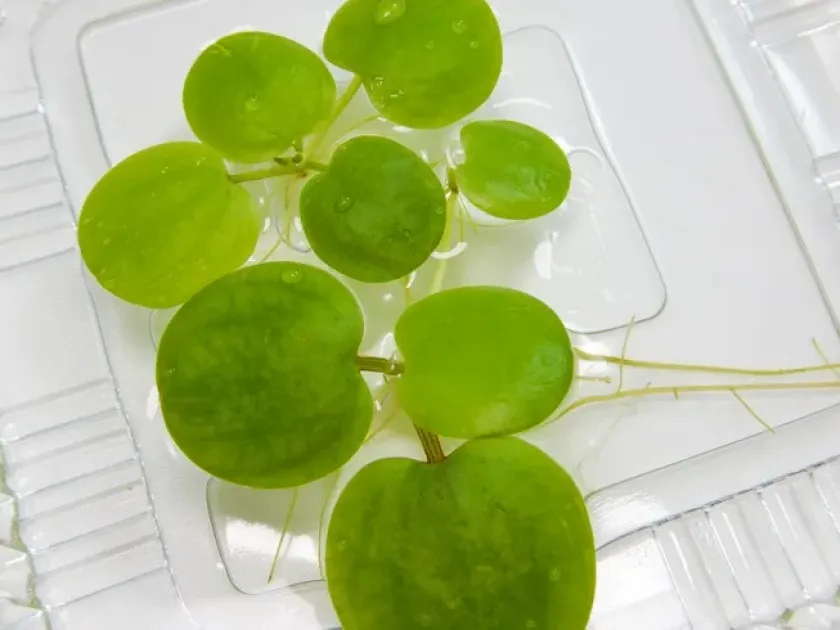
Smooth frogbit (Hydrocharis laevigata) is a perennial aquatic plant belonging to the Hydrocharitaceae family. It is native to tropical and subtropical regions, primarily recognized for its floating habit and attractive, smooth-textured foliage.
The plant thrives in nutrient-rich, still, or slow-moving water bodies. It acts as an excellent natural filter, absorbing nitrates and phosphates from the water column, which contributes to the overall stability of the aquatic ecosystem.
Environmental conditions play a pivotal role in its development. Ideally, it requires warm temperatures ranging from 20 to 28 degrees Celsius. Water quality should be monitored for neutral pH levels to ensure maximum nutrient uptake efficiency.
Lighting requirements are moderate to high. While the plant appreciates direct light for photosynthesis, excessive intensity in small containers may lead to dehydration or bleaching of the leaf margins if humidity levels are not maintained.
Regarding propagation, the species relies on stolons (runners) that extend from the mother plant to establish new daughter rosettes. Ensuring adequate surface area is crucial for the plant to spread naturally across the water surface.
Main diseases and pests
Major threats to Hydrocharis laevigata include fungal infections such as leaf rot, which often occur due to poor water circulation or high humidity trapped around the leaves. These infections spread rapidly in crowded conditions.
Pests such as aphids or certain species of aquatic snails can cause significant damage. Aphids often cluster on the undersides of leaves, sucking sap and weakening the plant, whereas snails may consume the leaf tissue entirely.
Competition from aggressive invasive aquatic weeds often poses a threat to the survival of the culture. These species can overshadow the frogbit, depleting the available carbon dioxide and sunlight necessary for its growth.
Chemical contamination, particularly from runoff containing herbicides, is detrimental. The plant is highly sensitive to external chemical stressors, which can cause immediate yellowing and structural collapse of the floating leaves.
To mitigate these risks, growers should maintain balanced water chemistry and remove infected or dead plant material immediately. Regular visual inspection of the leaves helps in early detection of potential infestations.