
Frogbit
Hydrocharis dubia
Description
Growing requirements
Hydrocharis dubia, commonly known as Asian frogbit, belongs to the Hydrocharitaceae family. It is a perennial floating aquatic plant native to various freshwater habitats across East and Southeast Asia, including parts of Russia, Japan, and China.
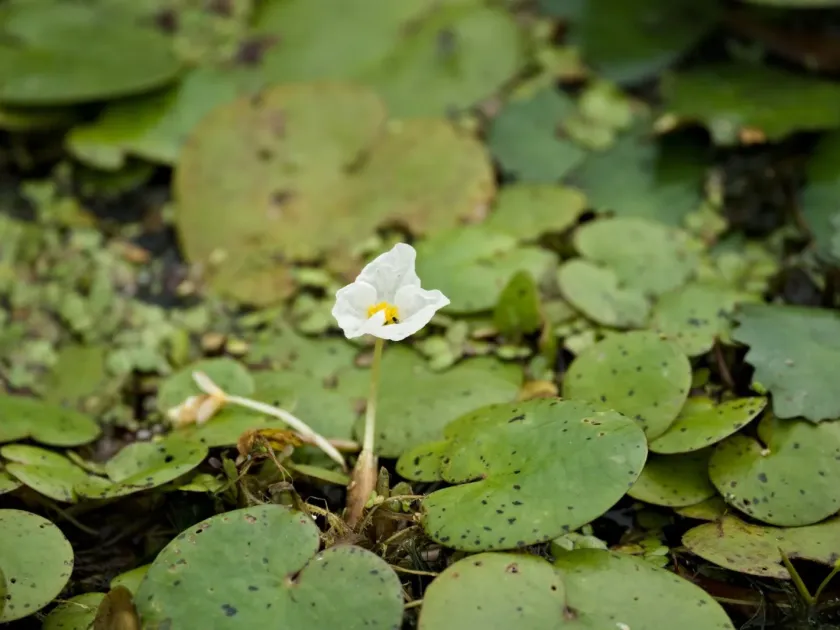
The plant features distinct kidney-shaped leaves arranged in a rosette that floats on the surface of water bodies. The root system consists of feathery, submerged roots that absorb nutrients directly from the water column, aiding in the purification of the ecosystem.
Optimal growth requires calm, stagnant, or slow-moving waters with adequate sunlight exposure. It thrives in nutrient-rich water, making it a popular choice for water gardens and ornamental ponds where it acts as a natural nitrate scavenger.
Temperature requirements for healthy development typically range between 18 and 28 degrees Celsius. The plant is highly adaptive and utilizes stolons to spread across the surface, rapidly forming dense green mats that provide shade for other aquatic life.
In terms of propagation, the species relies primarily on vegetative growth during the summer months. As temperatures drop, it produces overwintering structures known as turions, which sink to the substrate to survive the winter and germinate again in spring.
Main diseases and pests
The primary threats include aquatic insect larvae, such as those of the moth family Pyralidae, which can cause significant damage to the foliage. In some ecosystems, aphids can pose a risk, particularly when population density is high near the pond edges.
Pathological issues often involve leaf spot fungi or crown rot, frequently exacerbated by poor water quality or insufficient aeration. Maintaining a balanced pond environment with steady oxygen levels and proper plant spacing is essential to mitigate these biological risks.