
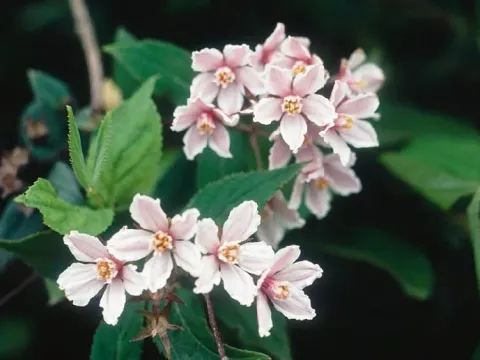
Deutzia rehderiana
Deutzia rehderiana
Deutzia rehderiana is a deciduous ornamental shrub belonging to the Hydrangeaceae family. Native to the mountainous regions of China, this plant has adapted to thrive in temperate climates, offering gardeners a spectacular flowering display during the late spring and early summer.
What the section contains
Deutzia rehderiana
When selecting a planting site, prioritize locations that receive full sun or light dappled shade. Adequate light is crucial for the plant to produce a profuse number of flowers; plants grown in deep shade typically exhibit weak stem development and reduced blooming.
The ideal soil for this species is nutrient-rich, moist, and well-drained with a slightly alkaline to neutral pH. Proper soil structure is essential, as waterlogged conditions can lead to root rot, especially during the dormant winter months.
Moisture management is a key aspect of Deutzia care. During the peak of the growing season, regular watering is necessary to prevent the soil from drying out completely. Applying organic mulch, such as wood chips or compost, around the base helps retain moisture and regulate soil temperature.
Routine maintenance includes annual pruning performed immediately after the flowering cycle concludes. Pruning encourages the development of healthy new stems from the base, which will be the primary source of blooms for the following growing season.
Deutzia rehderiana is generally resilient, but it may become susceptible to powdery mildew if environmental conditions are overly damp or if the planting site lacks adequate air circulation. Fungicidal treatments are effective if symptoms appear.
Aphids and various leaf-eating beetles are the most frequent pests to watch for. Inspecting the undersides of leaves and the tips of tender new shoots during the spring will allow for early detection and manual removal or application of eco-friendly insecticidal soap.
Cultural practices, such as proper spacing between shrubs, are the best defense against disease outbreaks. Ensuring that the foliage can dry quickly after rainfall significantly reduces the risk of fungal colonisation.
Maintaining a clean garden bed by removing leaf litter in the autumn is recommended to eliminate potential overwintering sites for both spores and dormant insects. This basic hygiene practice is fundamental for long-term plant health.
Fertilization should be managed carefully, as an excess of nitrogen can create soft, succulent growth that is disproportionately attractive to pests. Using a balanced, slow-release fertilizer in early spring supports overall vigor and disease resistance.