
Grey cottonhead
Conostylis candicans Endl.
Description
Growing requirements
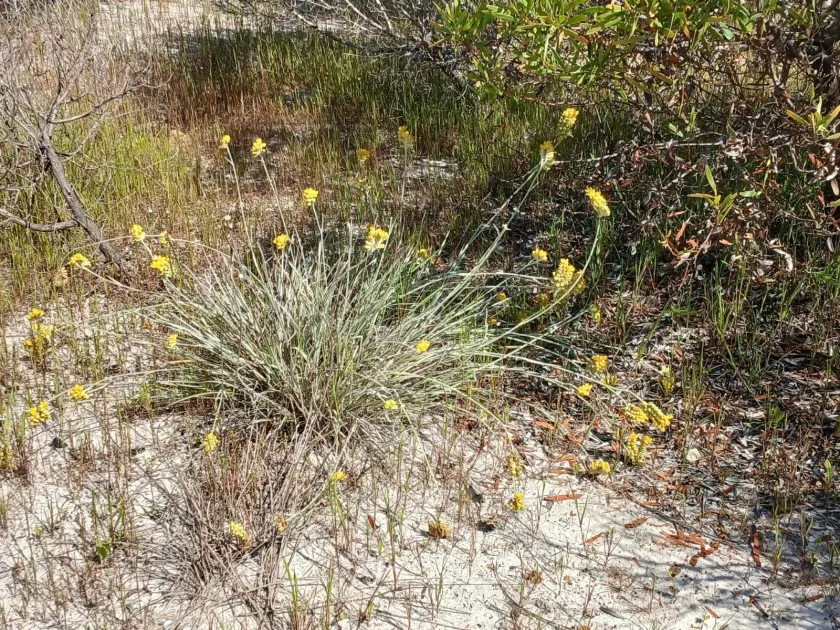
Grey cottonhead (Conostylis candicans) is a perennial herbaceous plant belonging to the Haemodoraceae family. It is native to the southwest region of Western Australia, where it has evolved to thrive in sandy soils and harsh, arid environmental conditions.
The plant is characterized by its clumping growth habit, typically reaching a height of 20 to 50 centimeters. Its most distinctive feature is the narrow, linear leaves covered in fine, silvery-white hairs, which provide a soft, greyish appearance and serve as a protection mechanism against excessive transpiration.
Regarding cultivation requirements, this plant demands excellent drainage to survive. It is best suited for sandy, low-nutrient soils with a neutral or slightly acidic pH. Incorporating organic material is generally not recommended, as these plants are adapted to poor-nutrient conditions and may suffer from fertilizer burn.
Exposure to full sun is essential for the healthy development of Conostylis candicans. While it is remarkably drought-tolerant, it requires consistent sun exposure to maintain its compact, dense shape and to prevent etiolation of the silver foliage.
In landscaping, it is highly valued for xeriscaping and coastal garden designs. Its striking appearance and low maintenance requirements make it an excellent choice for ground coverage or as a focal point in gravel gardens where water conservation is a priority.
Main diseases and pests
The primary threat to the health of grey cottonhead is root rot caused by Phytophthora species. This condition is almost always a result of poor drainage or overwatering. Maintaining a strict irrigation schedule is crucial for the longevity of the plant.
Pests are generally not a major concern, but mealybugs can occasionally infest the dense leaf bases. If such infestations occur, horticultural soap or specialized systemic insecticides may be necessary to protect the plant's decorative integrity.